
In a November 17, 2026 commentary, infectious diseases physician Andrés Henao describes how Americans who came of age in the 1980s and early 1990s found HIV/AIDS difficult to ignore. Hospitals held young people sick with infections and cancers rarely seen in healthy adults. Friends and partners died quickly. Public health officials warned that the disease, transmitted mainly through sexual contact or shared drug needles, had no effective treatment. At the U.S. epidemic’s height in 1995, more than 56,000 people with AIDS died in a single year.
Antiretroviral therapy—medications that stop HIV from multiplying—then changed the epidemic. Over the following three years, AIDS diagnoses fell by 45 percent and deaths among people with AIDS fell 63 percent. Someone who is 20 years old was born into a different situation. For people who can obtain treatment and stay on it, HIV is now a manageable chronic infection. As of 2025, however, more than 20 percent of people living with HIV worldwide still could not access treatment.
Henao, who cares for people with HIV, writes that he has watched this shift change patients’ lives and public thinking about a once-fatal disease. The resulting public health question is how to prevent new infections in a generation that grew up with no memory of the disease at its worst.
Treatment and prevention have changed what HIV means
Life expectancy with HIV has changed sharply since the 1980s. Modern antiretroviral treatment can lower the amount of virus in the blood to levels that standard tests cannot detect. People who maintain that suppression can live long, healthy lives. A person with a sustained undetectable viral load will not sexually transmit HIV, a principle known as undetectable equals untransmittable, or U=U.
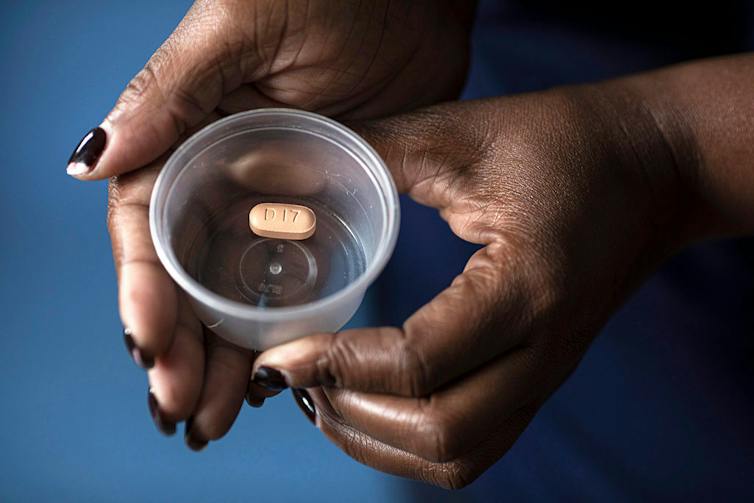
People who do not have HIV also have highly effective prevention options. Pre-exposure prophylaxis, or PrEP, can dramatically reduce the chance of acquiring HIV. It was first available as a daily pill and later in longer-lasting forms. In 2021 the U.S. Food and Drug Administration approved cabotegravir, an injectable given every other month to prevent infection. In 2025 the FDA approved lenacapavir, an injectable given once every six months.
HIV has not disappeared. In 2024, 38,793 people were diagnosed with HIV in the United States and several territories. People ages 25 to 34 accounted for 37 percent of those diagnoses, the largest share of any age group. In 2025, about 26 million of the 41 million people living with HIV worldwide were in sub-Saharan Africa, and more than 20 million were receiving antiretroviral treatment—an expansion far beyond the early decades of the epidemic. Henao writes that the dismantling of U.S. global aid during the second Trump administration has nonetheless disrupted community programs and delivery systems that make sustained treatment possible.
Success can make a continuing risk less visible
Successful prevention can make a disease seem less threatening than it still is. Measles is an imperfect but useful comparison. Before vaccines, it infected millions of Americans and caused hundreds of deaths each year. Vaccination made it uncommon enough that the United States declared measles eliminated in 2000. The virus did not stop being dangerous. When vaccination rates fall, it can return. In 2026 the United States saw thousands of new measles cases, overwhelmingly among people who were unvaccinated or whose vaccination status was unknown. Declining rates, fueled in part by persistent misinformation and vaccine skepticism, let measles regain a foothold. On November 13, 2026, the United States lost its measles elimination status.
HIV is different: it does not spread through respiratory droplets, and there is still no effective HIV vaccine. Both diseases, however, show that when people no longer regularly see an infection’s consequences, the reason for preventing it can become less intuitive.
Younger adults view HIV differently from their parents’ generation. AIDS wards, funeral notices, and the intense campaigns of the early epidemic are history rather than memory. A 2026 national survey found that only 31 percent of Gen Z adults said they felt knowledgeable about HIV, compared with 60 percent of Gen X adults who came of age during the height of the epidemic.
Prevention tools are unevenly used
Henao cautions that it would be too simple to attribute risk only to a loss of fear. Access to health care, stigma, education, and the availability of newer tools all affect whether someone contracts HIV.
Condoms remain important. Used correctly and consistently, they are highly effective at reducing sexual transmission of HIV. In a study of more than 13,500 sexually active U.S. high school students, fewer than 60 percent reported in 2013 that they used a condom the last time they had sex. By 2023 that figure had declined to 52 percent. Only 7 percent of all high school students reported ever having been tested for HIV.
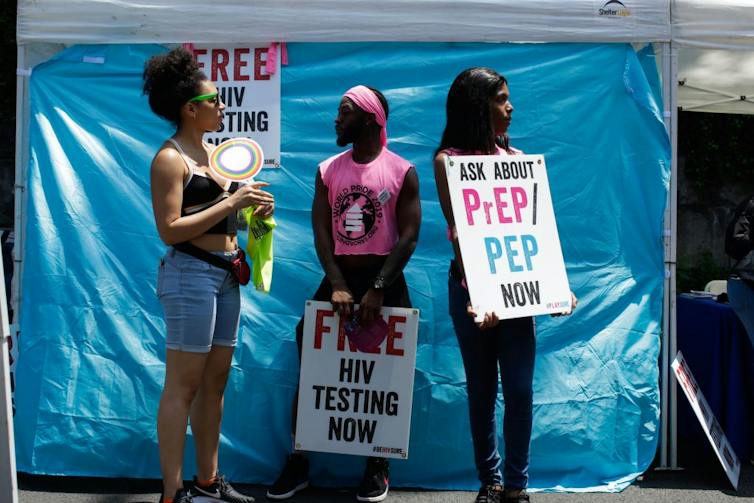
Effective medication does not mean everyone who could benefit is using it. HIV testing programs funded by the U.S. Centers for Disease Control and Prevention reported that only a little over 57 percent of people tested in non-healthcare settings had heard of PrEP, and fewer than 9 percent of those with a negative HIV test were taking it. Younger people have also lagged in PrEP use. An analysis of a federally run national HIV database found that fewer than 24 percent of people ages 13 to 24 who could benefit from PrEP were prescribed it in 2022, compared with more than 45 percent of those ages 35 to 44. Having powerful tools is not the same as reaching the people who need them.
Prevention messages no longer rest on recreating fear
HIV in 2026 is not HIV in 1986. Recreating the fear of the 1980s is neither realistic nor desirable. That fear brought heavy stigma against gay men, people who inject drugs, and people living with HIV, and stigma still persists. Current U.S. campaigns emphasize reducing stigma and often tailor messages to communities disproportionately affected by HIV. Gaps remain among people who do not see themselves as at risk: in 2025, only 34 percent of sexually active straight adults at increased risk for HIV had heard of PrEP, and just 1 percent were using it.
Messages for younger generations can instead reflect what decades of research have made possible—preventing HIV and living fully with it. Substantial gaps in understanding remain, especially among teens and young adults. Although infection is now treatable and manageable across large parts of the world, it still requires regular medical monitoring and treatment. Knowing that effective treatment prevents sexual transmission can reduce stigma without suggesting that acquiring HIV has no consequences.
Access to treatment remains unequal. Some parts of the United States and the poorest regions of the world still see AIDS-related complications and opportunistic infections. HIV infection may also be associated with a slightly lower life expectancy because of a higher risk of cancer or cardiovascular disease.
World AIDS Day on December 1 is partly a time to remember the millions of people lost in an epidemic that transformed medicine, public health, and communities. Preserving that history, Henao argues, is not about asking young people to inherit an earlier generation’s fear. The greater challenge is ensuring they inherit its lessons while receiving prevention tools earlier generations never had.
Henao has stated that he does not work for, consult, own shares in, or receive funding from any company or organization that would benefit from the article, and has disclosed no relevant affiliations beyond his academic appointment.