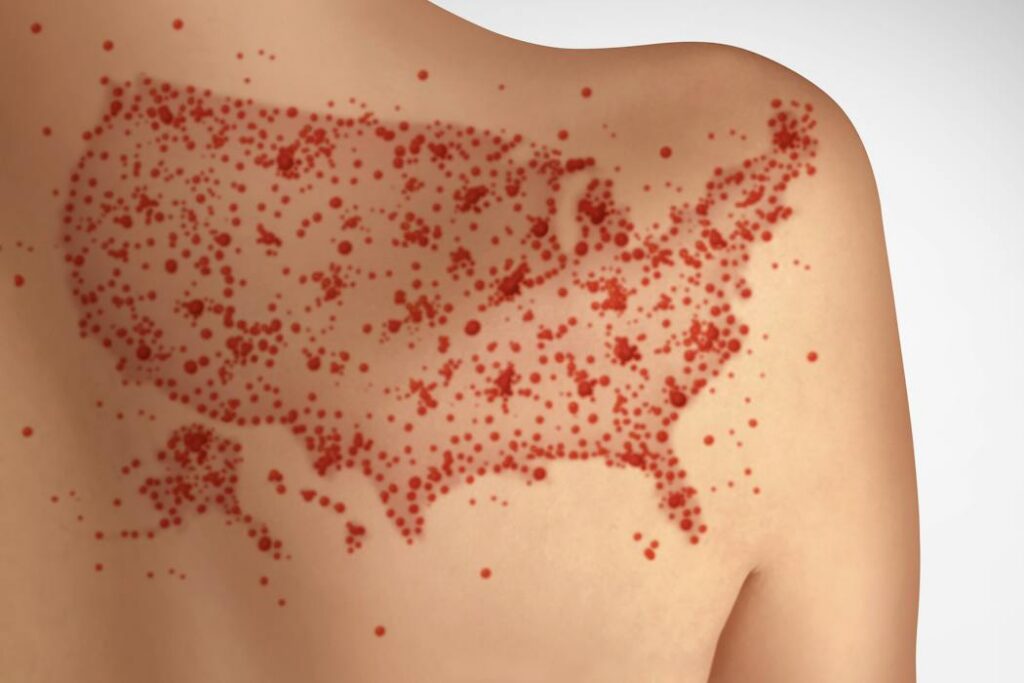
In an analysis published on November 16, 2026, epidemiologist Katrine L. Wallace wrote that the United States had lost measles elimination status, a public-health designation it had held since 2000. A commission of the Pan American Health Organization, the World Health Organization’s regional office for the Americas, reached that conclusion in November 2026. A formal announcement was still expected on November 17.
Elimination status means local measles transmission has been absent for at least 12 months. Canada lost the designation in 2025. The United Kingdom and other countries in Europe and central Asia lost it in early 2026.
Why sustained spread returned
Measles is among the most contagious diseases and still circulates in much of the world. Wallace, an assistant professor of epidemiology and biostatistics at the University of Illinois who studies misinformation as an exposure that can make populations sick, wrote that spread is limited by herd immunity: enough people vaccinated to break chains of transmission. For measles, that level is at least 95%.
In the 2025–26 school year, MMR coverage among U.S. kindergartners was 92.4%, down from 95.2% in 2019–20. Wallace described the 2025–26 figure as 92%. Exemptions from any required vaccine had risen to a record 4.2%.
A measles vaccine has been used in the United States since 1963, and the combined measles, mumps and rubella vaccine since 1971. Two doses are about 97% effective. A federal program created in 1993 made vaccination free for eligible children. Reported cases later fell by more than 99%, and measles was declared eliminated in 2000. Wallace noted that the experts who certified elimination warned it would require sustained high vaccination, fast outbreak response and strong surveillance. If any of those failed, imported cases could spread.
Before the vaccine, measles infected an estimated 3 million to 4 million Americans a year. Tens of thousands were hospitalized and hundreds died. Even though most infections went unreported, the official count in 1963 was nearly 400,000 cases. About 1 in 20 children who contract measles develop pneumonia. The virus can also erase part of immune memory, an effect called immune amnesia, leaving children open to infections they had already overcome. Rarely, it causes subacute sclerosing panencephalitis, a fatal brain disease that appears years after apparent recovery. Wallace reported that a child in Los Angeles died of that complication in 2025.
Cases, hospitalizations and differing death counts
As of November 12, 2026, the Centers for Disease Control and Prevention had counted 5,412 measles cases for 2026, the highest total since 1991, and 591 hospitalizations. Among children under 5, 1 in 6 had been hospitalized. Six deaths appeared in the CDC’s 2026 count, which relies on federal death-certificate data.
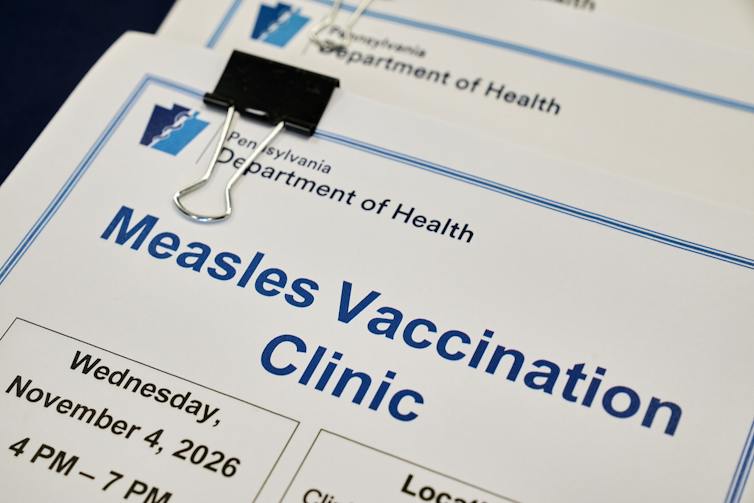
States, using a broader definition, reported 10 deaths: seven in Pennsylvania, one in New York and two in Wisconsin. Those totals are not the same measure as the CDC figure. By Pennsylvania’s November 13 count, that state’s outbreak alone had produced 1,542 cases and 305 hospitalizations.
Major outbreaks had also hit South Carolina, Utah and Arizona after the West Texas outbreak in early 2025, which Wallace identified as the start of the national surge. Utah’s outbreak began in June 2025 and had continued past 12 months. She wrote that this outbreak alone breached the WHO definition of measles elimination and could have triggered the loss of status.
Of 2026 cases, 96% were in people who were unvaccinated or whose vaccination status was unknown. The 92.4% kindergarten rate leaves about 280,000 kindergartners without documented MMR. Idaho had the lowest state rate, 75.2% of kindergartners; some counties and communities in Idaho and elsewhere were lower still. Adults were 41% of the year’s cases, and 15% of those adults were hospitalized. Many adults vaccinated before 1989, when a second MMR dose was added, received only one dose.
Misinformation and federal statements
Wallace’s explanation is that the vaccine worked so well that, within a generation, most parents and many doctors had never seen measles, leaving claims about vaccine risk with little direct experience of the disease to weigh against them. A 1998 paper fraudulently linking MMR to autism was retracted in 2010, and its author lost his medical license. The claim has persisted, although studies that included millions of children have found no link.
Kindergarten MMR coverage has fallen every year since the 2019–20 school year. In a 2025 KFF poll, parents who believed any false claim about measles were more than twice as likely to have skipped or delayed vaccines. Wallace also wrote that, since the COVID-19 pandemic, vaccine misinformation has spread in social-media echo chambers and that the anti-vaccine movement has used “medical freedom” to reach a larger audience.
On August 10, 2026, President Donald Trump signed an order calling for MMR to be split into three single-disease shots. Those separate products are not sold in the United States. Wallace wrote that there is no published evidence that separating MMR offers a benefit, and that more visits create more chances for missed doses.
Health and Human Services Secretary Robert F. Kennedy Jr. suggested in August 2026 that Pennsylvania’s first two measles-associated deaths “may even have been altogether fabricated.” State officials had investigated both deaths. While questioning the vaccine and the deaths, he promoted vitamin A and nutrition as measles cures. The CDC classifies vitamin A as supportive treatment, not a cure or a substitute for vaccination.
What regaining the status would require
Regaining elimination status would mean at least 12 months without continuous transmission. Wallace wrote that this would take the same conditions that produced elimination in 2000—stronger surveillance, rapid outbreak response and higher vaccination—and federal leadership focused on those goals.
The Department of Health and Human Services has attributed current vaccination gaps to missed pediatric appointments during the COVID-19 pandemic. CDC Director Erica Schwartz said the agency would not change its measles response because elimination status was lost. Wallace also pointed to the August order, revisions to long-standing vaccine recommendations, chronically underfunded public-health infrastructure, and the loss of many career public-health scientists’ jobs in 2025. In her account, the surveillance capacity that made elimination possible has been substantially weakened.
She wrote that losing the designation does not change the evidence that the vaccine is safe and effective. The case and death figures above come from federal and state counts that do not use the same definitions, so they should not be treated as interchangeable. This summary reports those figures and Wallace’s November 16, 2026 analysis; it is not individual medical advice.