
A chapter of the World Happiness Report 2026 argues that social media exposes adolescents to serious direct harms and contributes to depression and anxiety, particularly with heavy use. It makes a second, more uncertain claim: that the spread of always-accessible social media helped drive the decline in adolescent mental health observed in many Western countries during the 2010s.
The chapter is dated January 1, 2026. The supplied text also marks its paragraph on clinicians’ views as amended on October 5, 2026.
What evidence does the chapter use?
The authors bring together seven lines of evidence: surveys of young people and adults who work with them; internal company research and documents; cross-sectional and longitudinal studies; experiments that reduce social media use; and natural experiments involving the rollout of internet access.
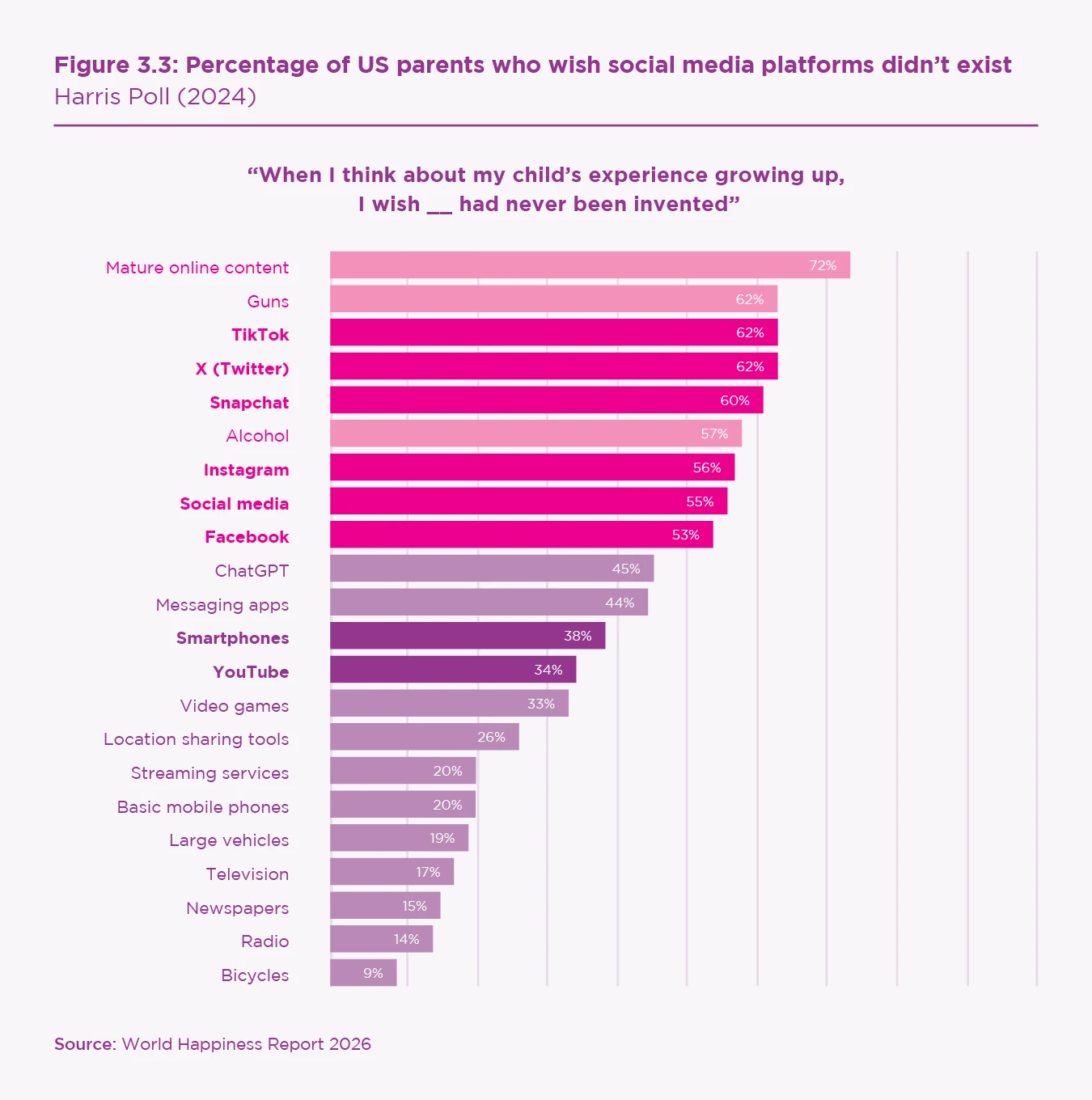
Some findings concern experiences reported by users, rather than clinical outcomes. In a Pew survey cited by the chapter, 25% of US teenage girls said social media harmed their mental health, while 50% said it negatively affected their sleep. The authors also acknowledge reported benefits: 74% of teens said social media helped them feel more connected to what was happening in their friends’ lives.
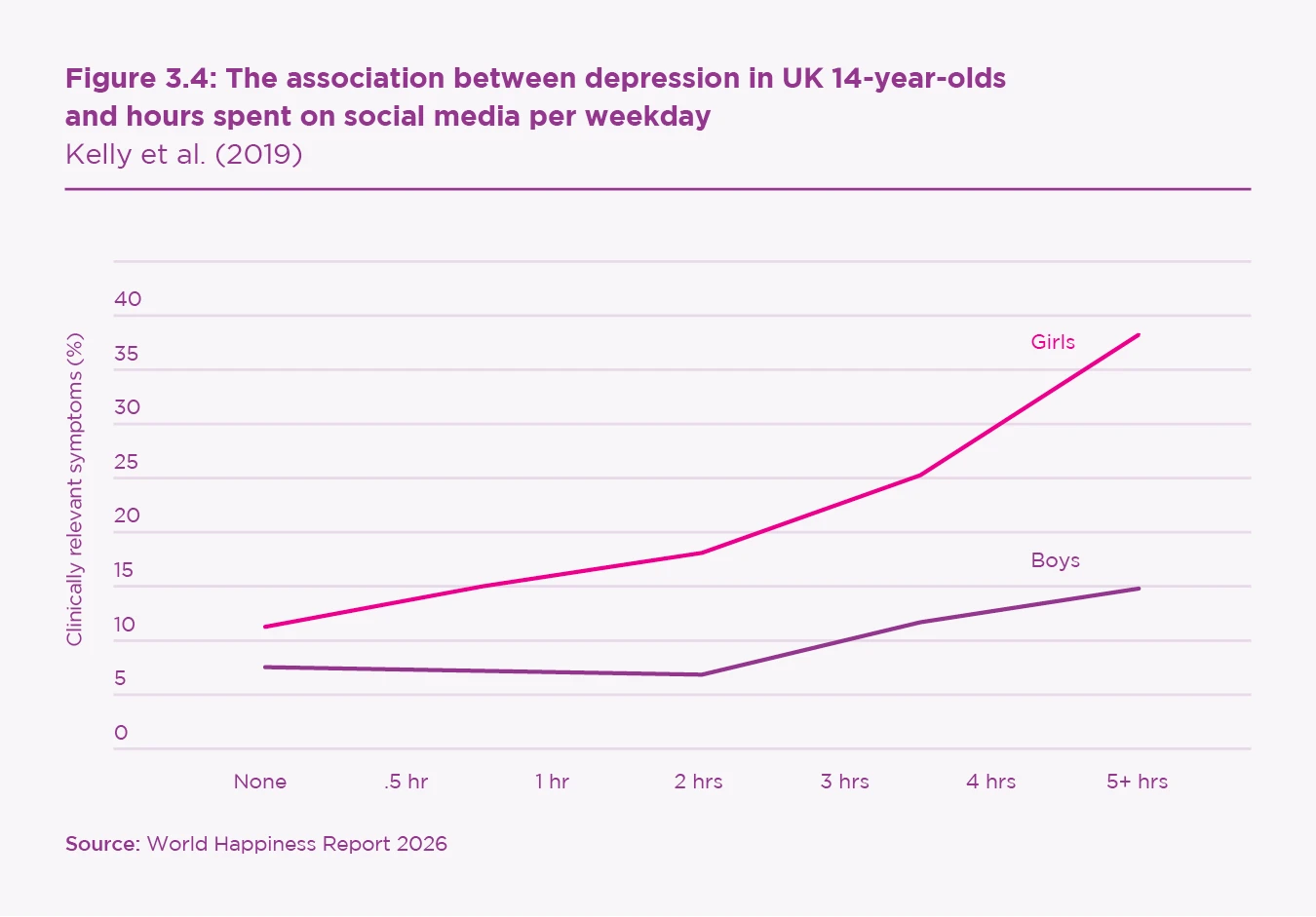
A study of 10,904 UK 14-year-olds found that those reporting at least five hours of social media use a day were about twice as likely to meet criteria for depression as those reporting less than one hour. That association alone cannot establish cause and effect. The chapter also cites a meta-analysis of 32 randomised trials involving 5,544 participants that found modest average improvements in depression, anxiety and wellbeing when social media use was restricted.

What remains uncertain?
The authors distinguish evidence about risks to individual adolescents from evidence about what caused population-wide changes years earlier. They say their seven lines of evidence do not prove that social media was a major cause of the historical trend, but argue that its contribution is highly plausible.
The chapter presents a forceful interpretation of a contested research field, not an individual diagnosis or a measure of what will happen to every young person. It acknowledges researchers who disagree and notes a key limit of some natural experiments: studies of broadband expansion do not isolate social media from other effects of internet access.