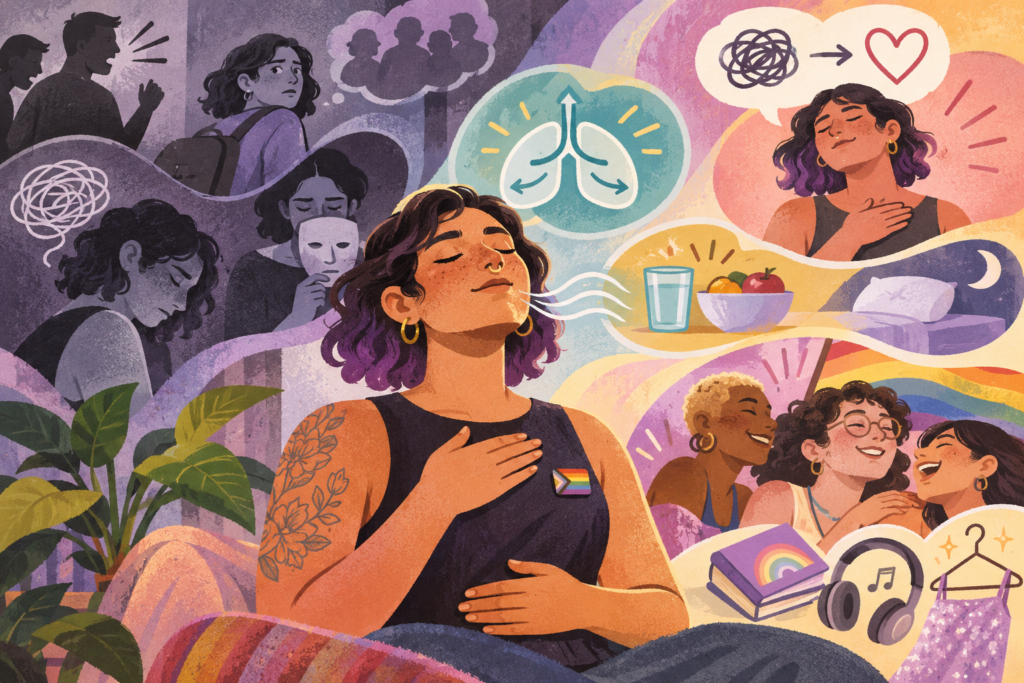
In a guide published on 23 September 2026, a writer who has provided group therapy for LGBTQ+ clients describes a familiar source of strain: prejudice can affect mental health not only when discrimination happens, but also when someone expects it to happen again. The guide draws on the minority stress model, which links the mental health disparities experienced by LGBTQ+ people to stigma and discrimination—not to being LGBTQ+.
That stress can take several forms: harassment or rejection, worry about future mistreatment, the effort of concealing an identity for safety, or shame absorbed from repeated negative messages. These experiences differ from person to person, and having them does not mean someone will develop a mental health condition.
The writer offers coping practices drawn partly from dialectical behaviour therapy (DBT):
- For an overwhelming moment, try paced breathing. The guide suggests breathing in for four seconds and out for six, making the exhale longer than the inhale. This may help someone steady themselves, but it does not remove the source of stress.
- Make room for the emotional reaction. Acknowledging that fear or hurt makes sense is not the same as deciding what someone else intended, or deciding to act on the feeling.
- Check basic physical needs. Hunger, thirst, discomfort and fatigue can be easy to overlook when stress is high. The guide suggests brief check-ins and small acts of care.
- Find personally meaningful sources of connection and joy. These might include affirming ways to express gender, LGBTQ+ books or music, supportive community, or actions aligned with one’s values. What feels affirming—and what is safe to do publicly—will vary.
Coping skills cannot make an unsafe environment safe. The guide notes that prejudice and fear of rejection can limit which activities feel possible. It also suggests seeking LGBTQ+-affirming professional support if self-help has not been enough. These ideas are general information, not a substitute for care tailored to an individual’s circumstances.