A chapter dated January 1, 2026, in the World Happiness Report examines how problematic social media use relates to adolescent wellbeing across 43 countries. It finds that adolescents reporting more problematic use also reported more psychological complaints and lower ratings of their lives in every country studied. The findings show associations, not that social media use caused poorer wellbeing.
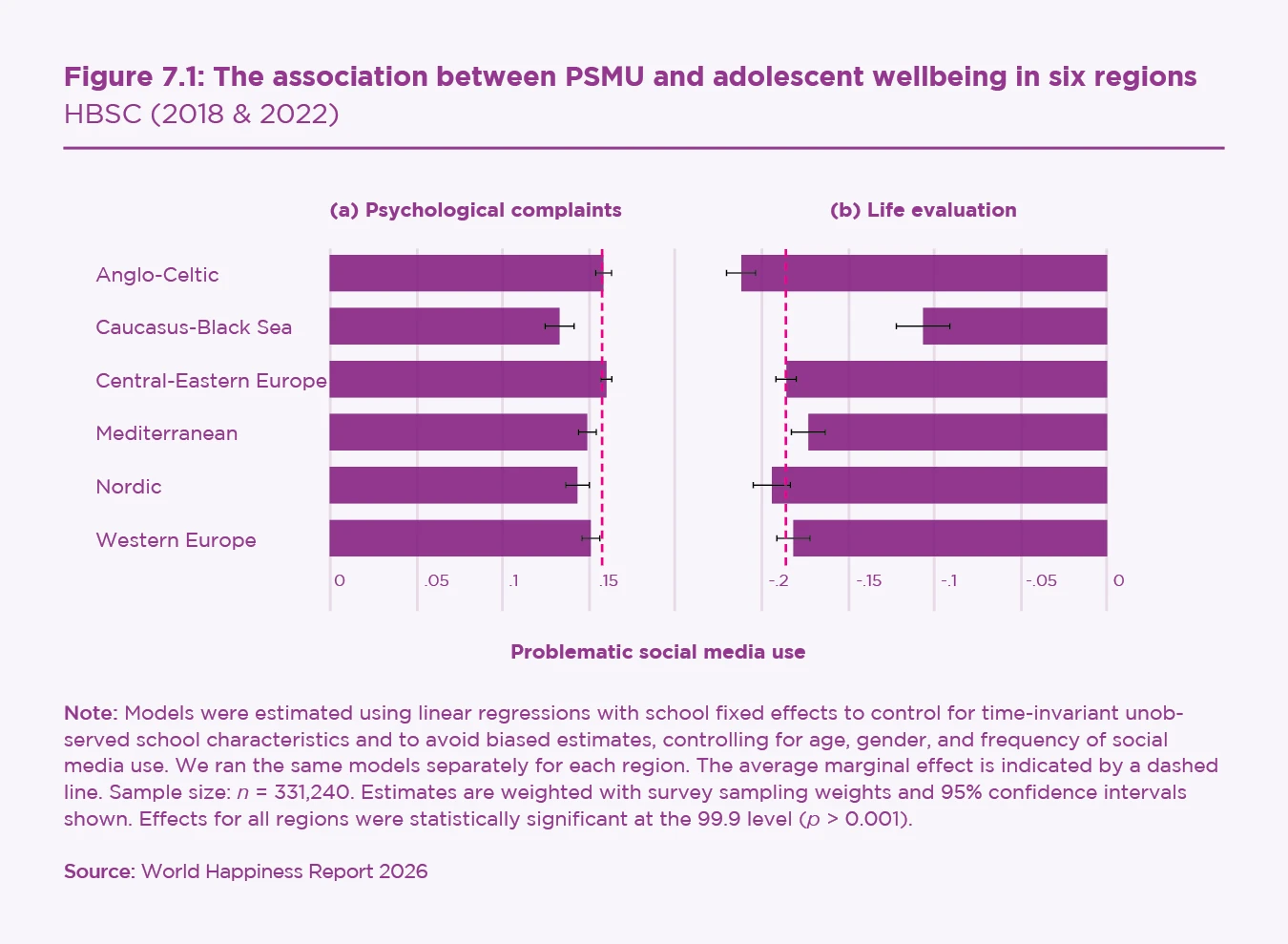
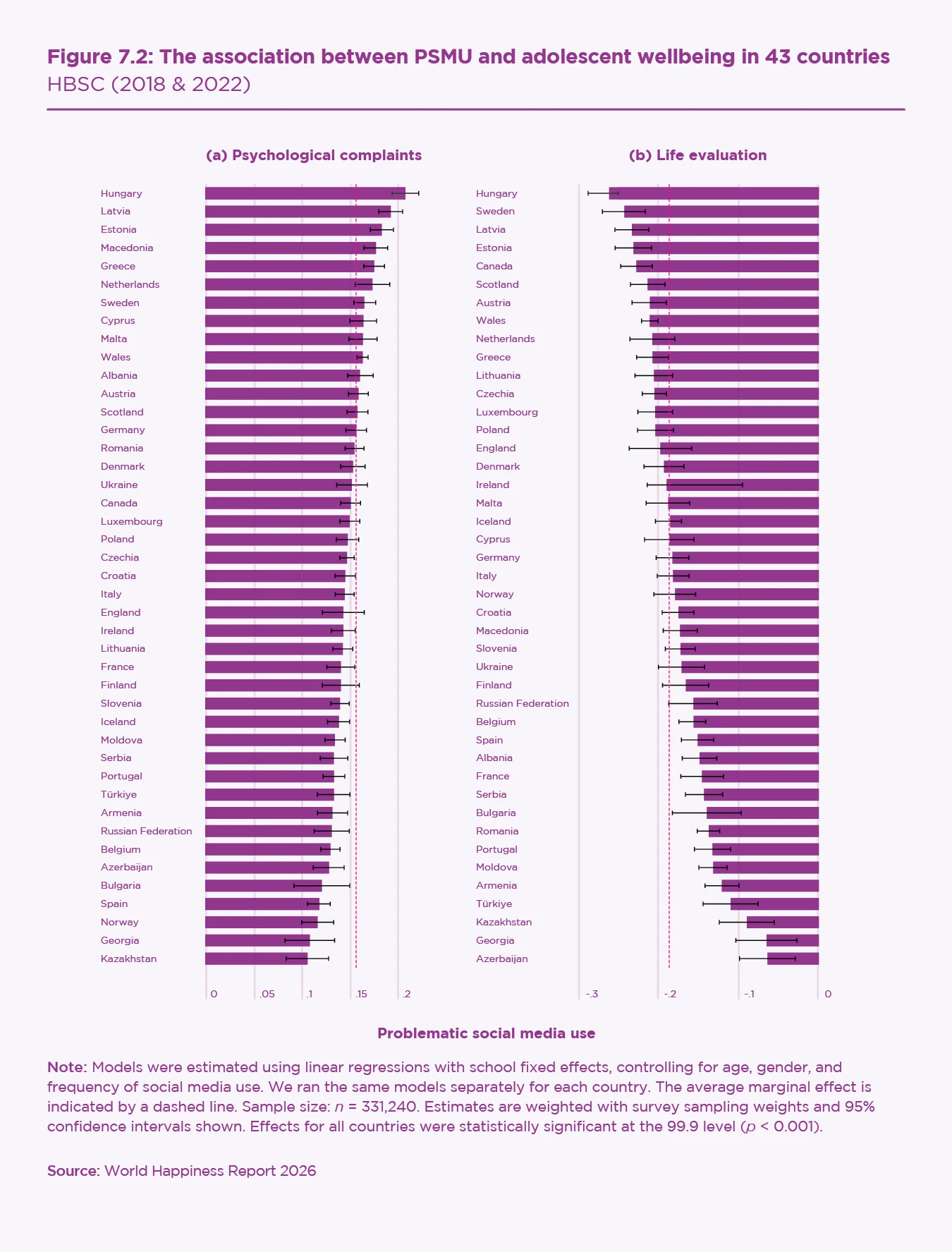
The researchers analysed Health Behaviour in School-aged Children survey data from 2018 and 2022, covering 331,240 adolescents aged 11–16. Their measure of problematic social media use captured compulsive patterns, such as difficulty cutting back or neglecting other activities. They assessed wellbeing using reports of low mood, irritability, nervousness and sleep difficulties, alongside a 0–10 life-evaluation scale. The analyses accounted for age, gender, frequency of social media use and differences between schools.
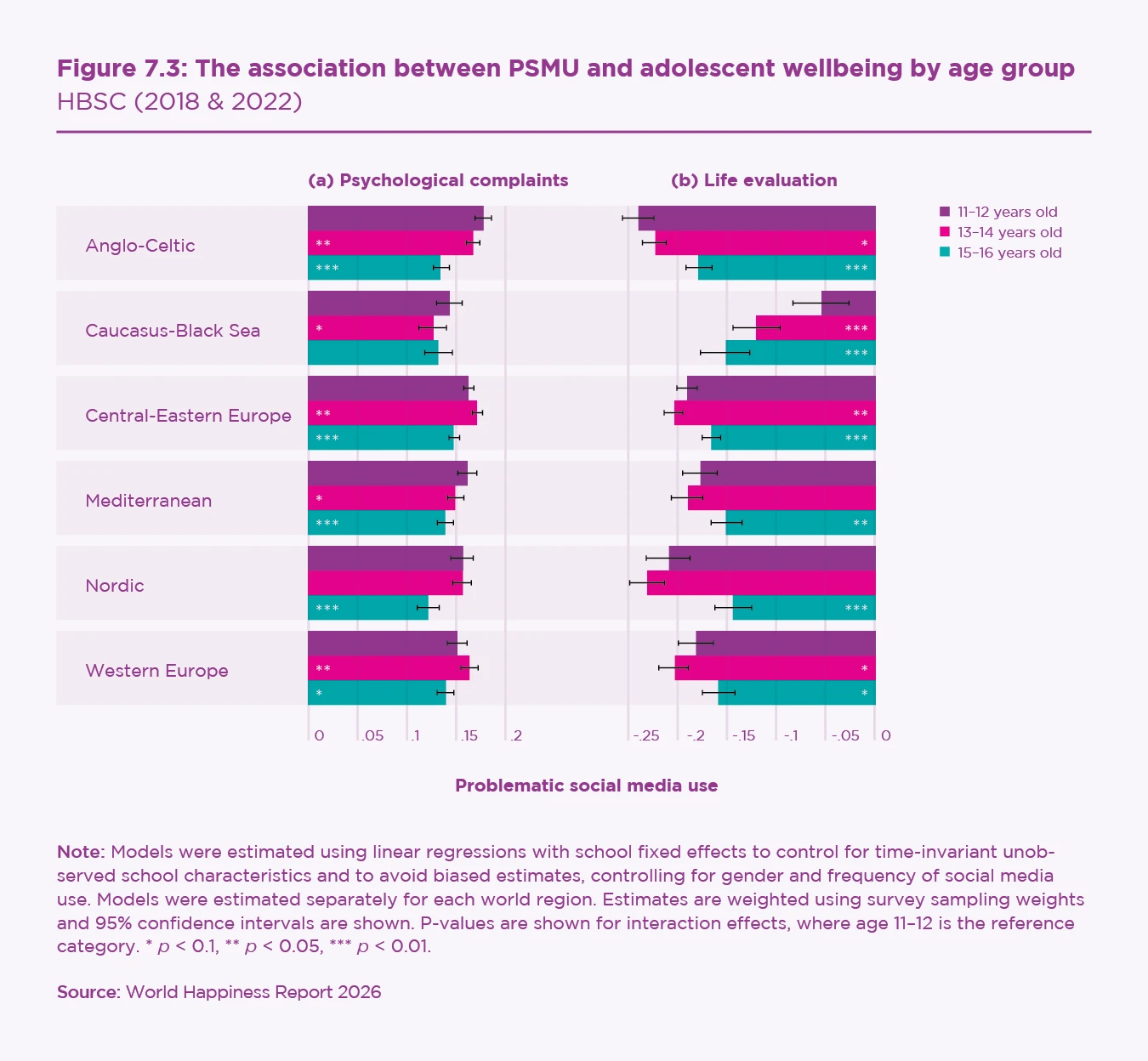
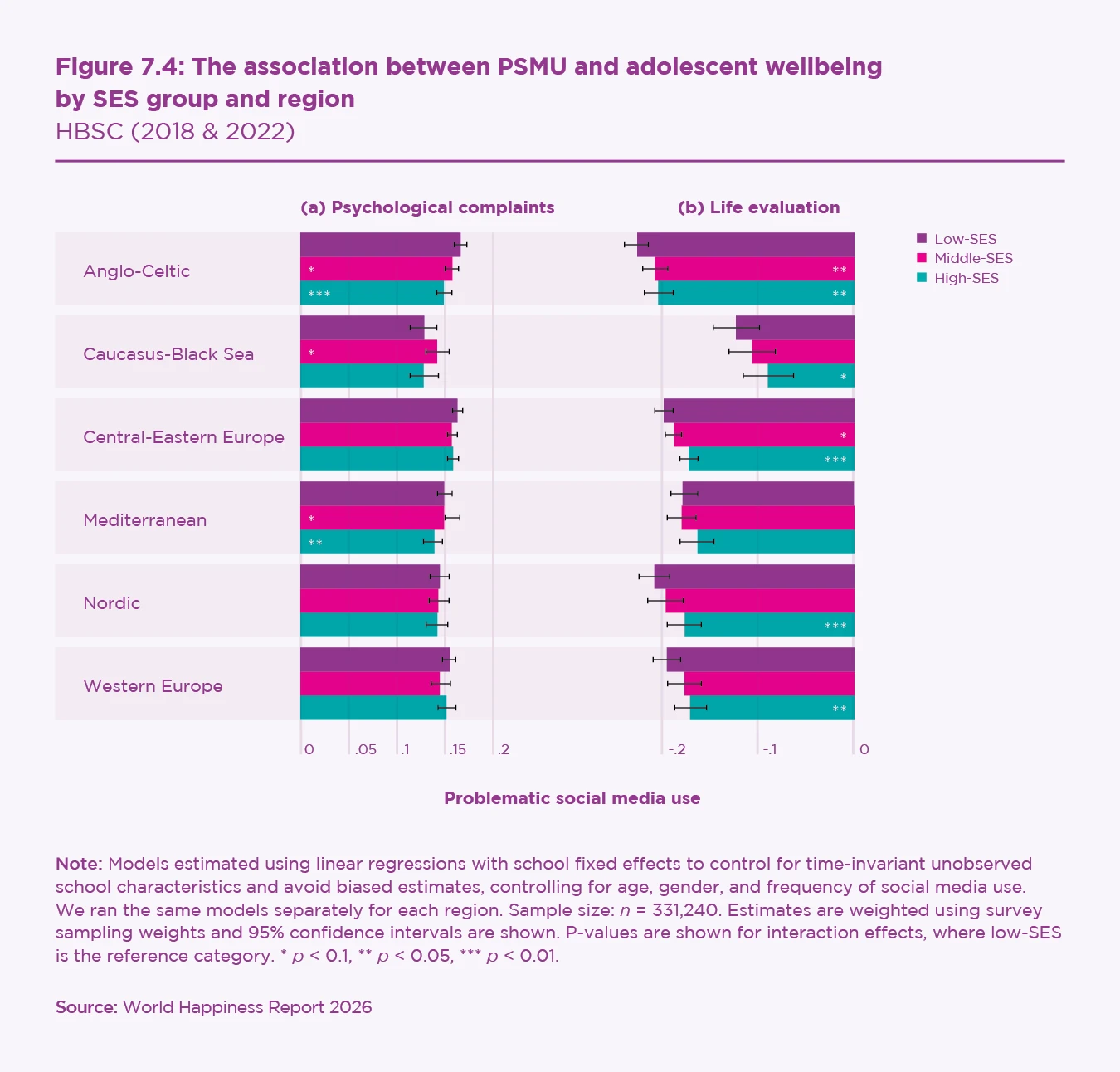
The association with lower life evaluation was generally stronger among adolescents from families with fewer material resources than among their more affluent peers. This socioeconomic pattern was less consistent for psychological complaints: among the six regions studied, the Anglo-Celtic region showed the clearest gap on that measure. The links between problematic use and both wellbeing measures also tended to be stronger at ages 11–12 than at older ages.
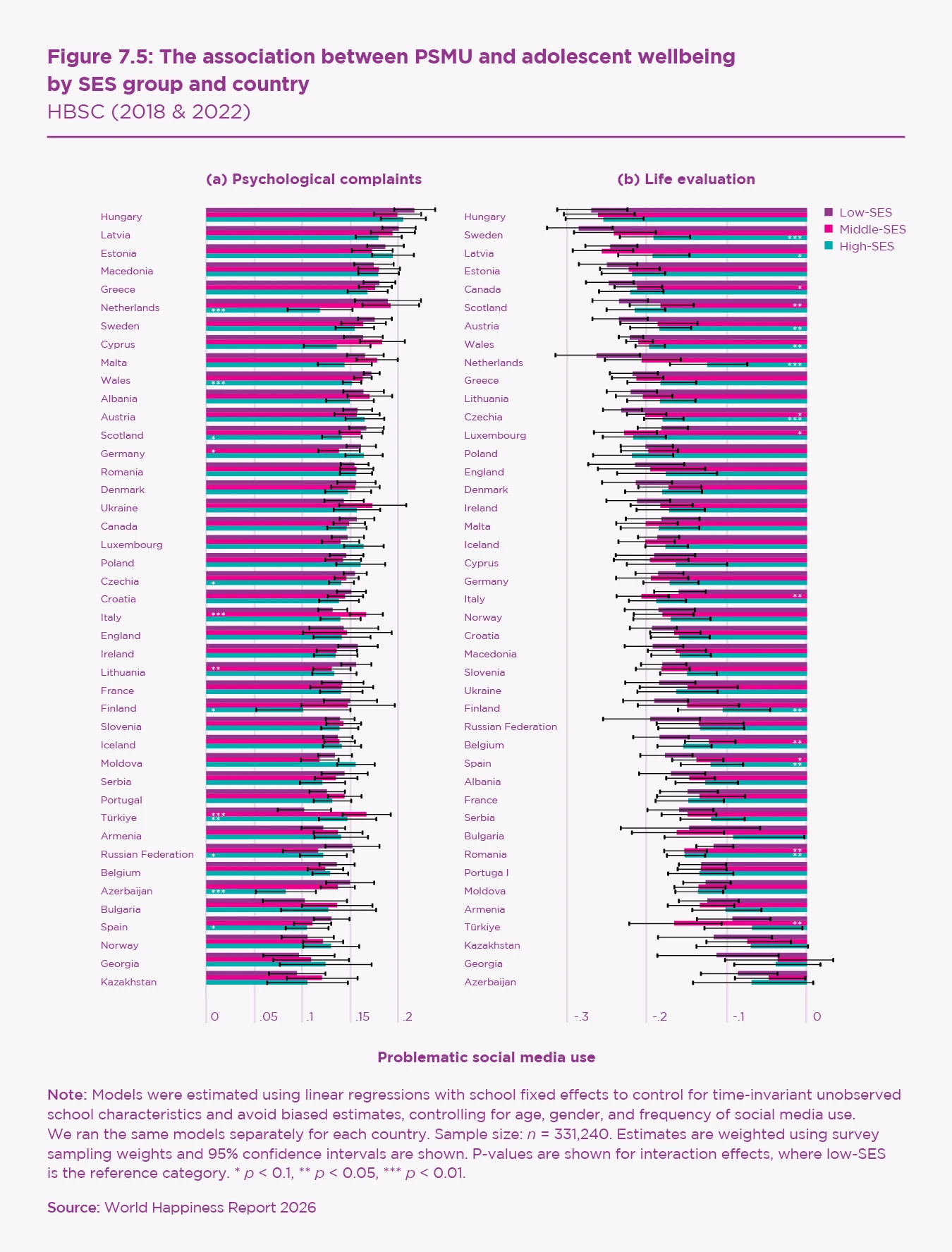
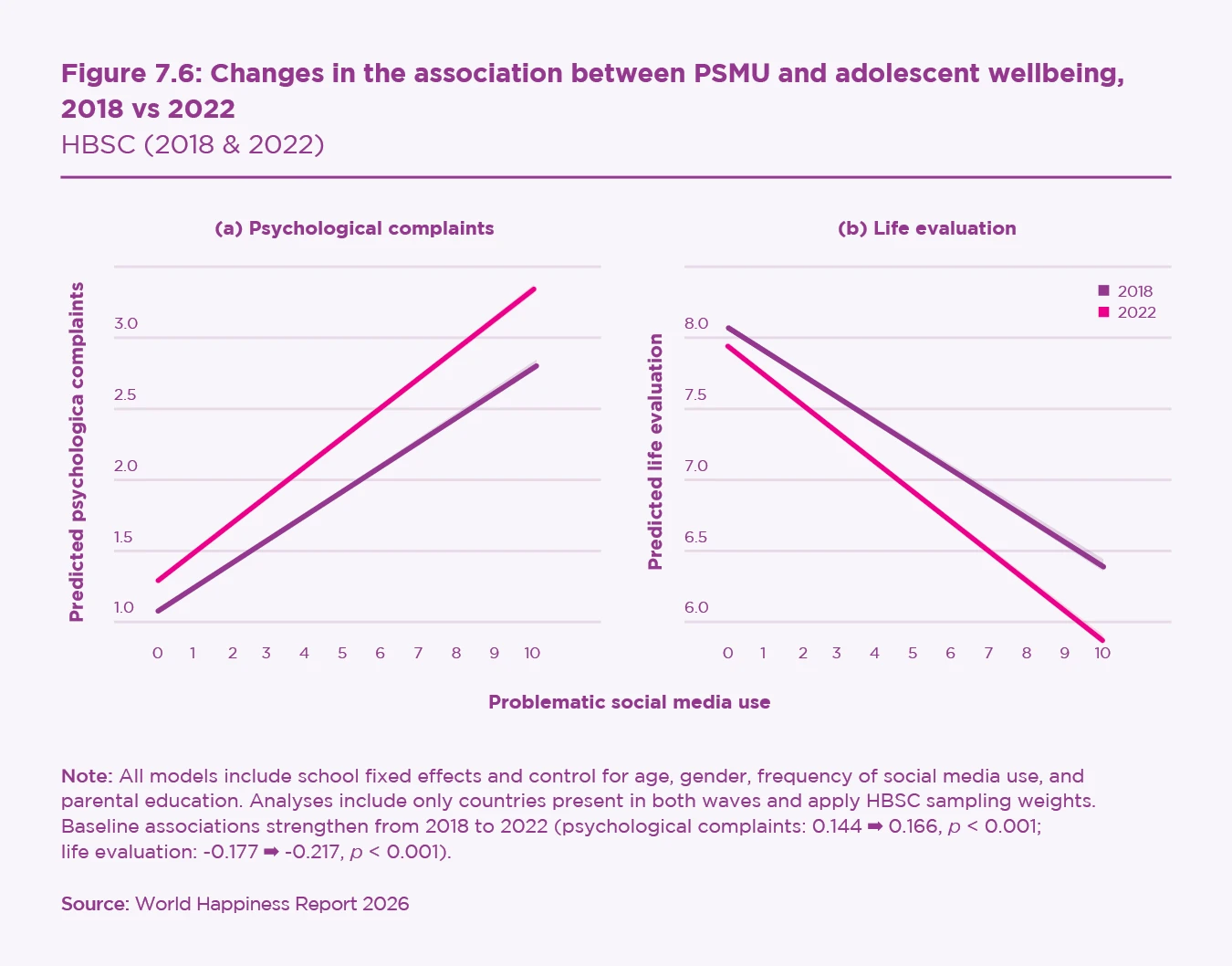
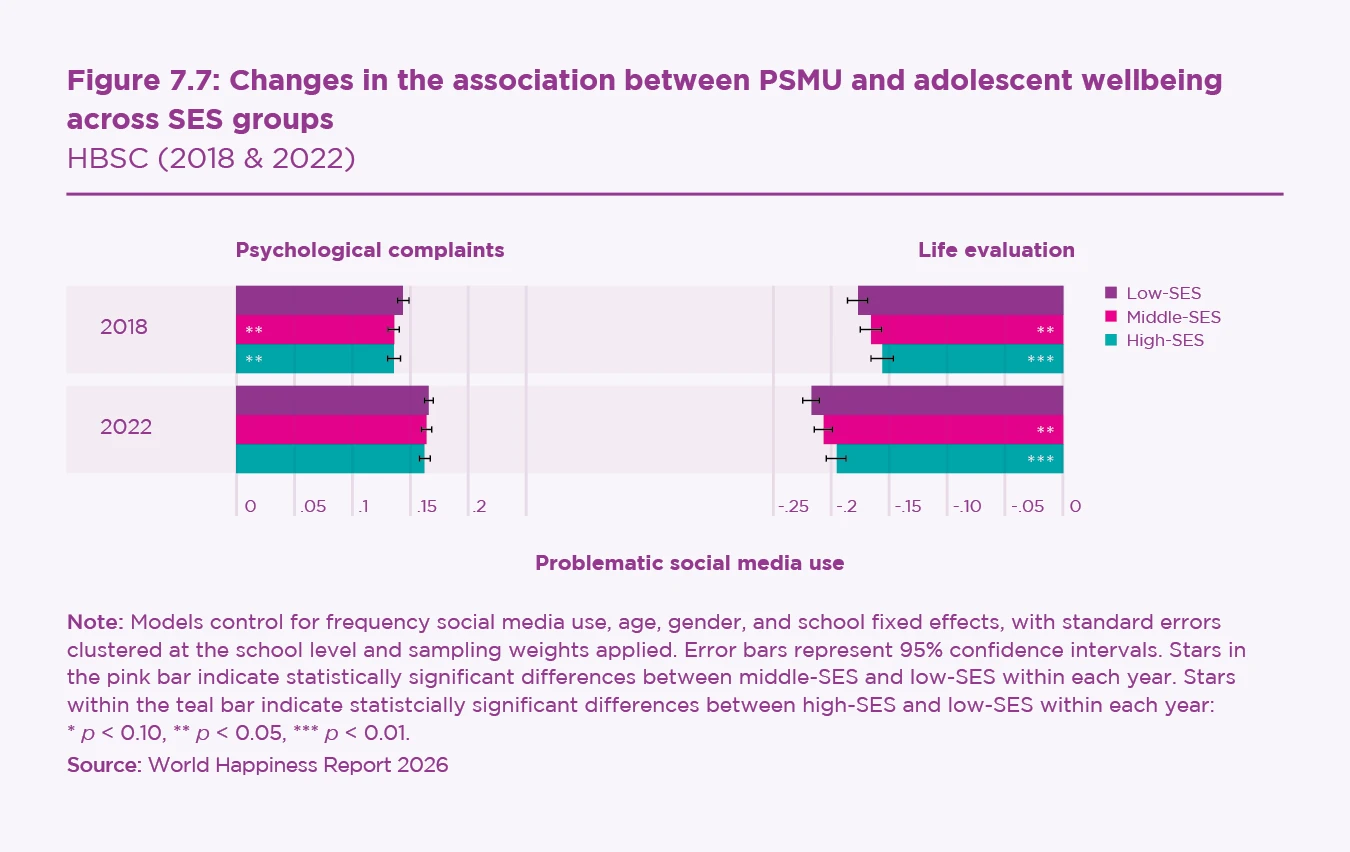
In countries included in both survey waves, the estimated association between problematic use and psychological complaints rose from 0.144 in 2018 to 0.166 in 2022; the association with life evaluation changed from −0.177 to −0.217. It strengthened across all family-resource groups, without an overall widening of the gaps between them. The chapter suggests pandemic-era changes in digital life as one possible explanation, but does not establish the reason for the shift.
Because the analyses cannot disentangle whether problematic use precedes poorer wellbeing—or whether poorer wellbeing contributes to problematic use—the results should not be used to diagnose an individual adolescent or assume that reducing social media use alone will improve their wellbeing.