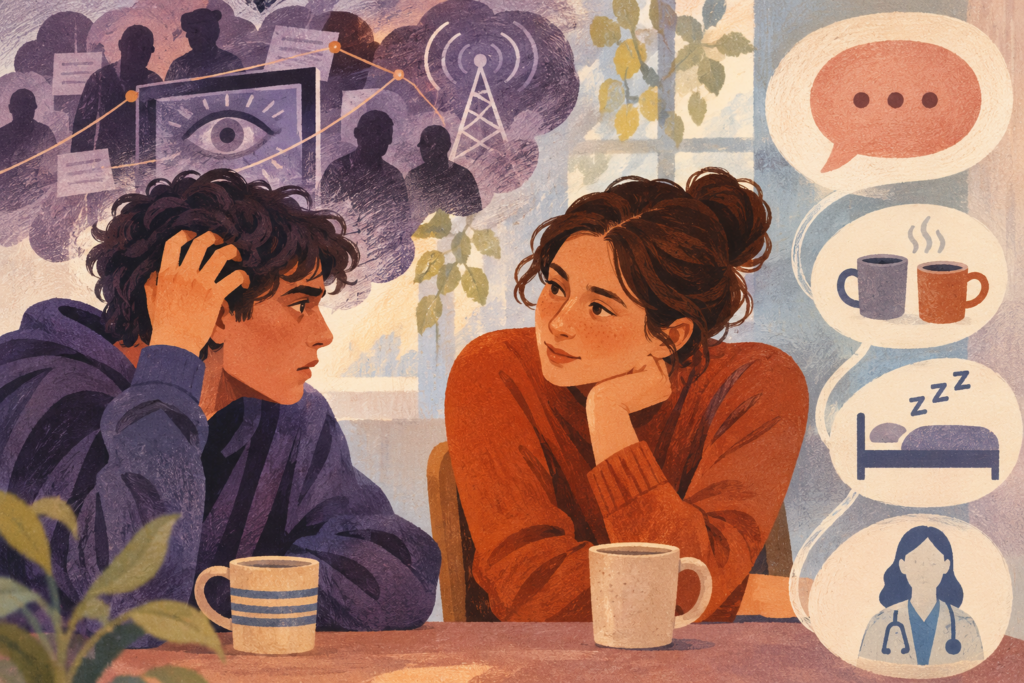
A concerning belief can feel entirely real to the person holding it. In a guide published on 10 November 2026, a clinical psychologist who works with people experiencing psychosis and their families explains that loved ones do not need to settle whether a belief is true—or diagnose the person—to offer support.
The guide focuses mainly on adolescents and adults experiencing delusions in the context of mental health conditions. It describes a clinical delusion as a belief that remains fixed despite clear contrary evidence and is not widely shared within the person’s cultural or social context. An unfamiliar religious or cultural belief, vigilance after real harm, or a strongly held opinion is not, by itself, a delusion.
Notice the pattern, not just the belief
The guide suggests paying attention to three features: conviction—whether the person can consider other explanations; frequency and intensity—how much the belief occupies their attention; and impact—whether it is disrupting their emotions, relationships, school, work or daily routines. Increasing fear, withdrawal, severe sleep disruption, unusual perceptions or changes in speech or behaviour can add to the concern. None of these observations is enough for a loved one to make a diagnosis.
Keep the conversation open
Rather than starting an argument about the belief, the psychologist recommends maintaining ordinary contact where possible: shared routines and conversations about everyday life can help preserve trust. Open questions such as “What has that been like for you?” can help you understand the person’s experience without immediately challenging their interpretation.
You can acknowledge distress without agreeing with a belief you do not share. For example: “That sounds really frightening. I’m not interpreting it the same way, but I can see how upsetting it feels to you.” If the person feels heard and is calm, asking permission to consider other possible explanations may leave room for reflection. The guide cautions against pressing this discussion when someone is highly distressed or experiencing an acute episode.
If the belief involves mistrust of you, and your presence appears to increase fear or agitation, another trusted person may be better placed to offer support for a time. Prioritise your own safety if you feel unsafe.
Bring in professional support
If concerns persist, the guide suggests connecting an offer of help to goals the person recognises, such as sleeping better, feeling less stressed or returning to school or work. A therapist, primary care clinician or psychiatrist may be able to help. Loved ones can also seek professional guidance themselves, even if the person is not ready to do so.
A rapid decline in daily functioning, inability to meet basic needs, extreme fear or agitation, or safety concerns may call for more urgent support from a local crisis service. For an immediate life-threatening emergency, contact local emergency services. Families are not expected to replace professional care.