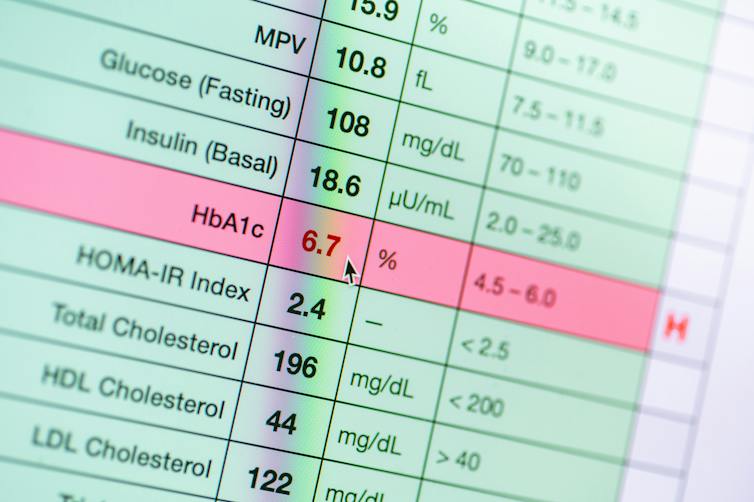
In an explanation published on November 10, 2026, neuroscientist and geneticist Michael F. Wells describes biomarkers as anything measurable in the body that gives clinicians insight into someone’s current or future health. They are already part of ordinary medical care, and laboratory methods are being developed to look for markers of why the same exposure does not affect everyone equally.
Those differences remain difficult to forecast. A family of five can be exposed to flu virus while only two become sick. A lifelong chain-smoker may live to 100, while a professional athlete in their prime dies of an unexpected heart attack. A drug can fail a clinical trial because of harmful side effects in a subset of patients even after showing good results in others. Wells’s answer to whether such outcomes can be predicted is that they cannot yet, though biomarkers might eventually help.
Measures already in use
Biomarkers take many forms and are often collected through blood tests and vital signs. Physiological biomarkers such as heart rate and blood oxygen levels indicate how well the body is functioning. Cellular biomarkers such as white blood cell count provide information on immune-system activity. Genetic biomarkers are parts of DNA that can offer clues to inherent risk of a particular disease or to how likely someone is to respond to a treatment. Many more biomarkers, Wells writes, remain to be discovered.
How biomarkers have been identified
The traditional approach asks which biological features differ between two or more groups. That can mean comparing patients who have a specific disease with healthy volunteers, people who respond to a drug with people who do not, or the same people at two different times. Many discoveries began as laboratory observations.
Hemoglobin A1c (HbA1c) levels in the blood are used to test for diabetes. The origins of the test date to the 1960s, when scientists found abnormally high levels of a protein in the blood of people with diabetes. Repeated clinical testing over the following decades confirmed the relationship between A1c levels and diabetes, and in 2013 the Food and Drug Administration approved the first A1c-based diabetes diagnostic test. Other biomarkers that also began with basic laboratory observations include those used in screening for colorectal cancer, drug metabolism, and inherited metabolic diseases in newborns.
Genetic biomarkers are typically found by scanning the genomes of thousands to millions of people for variants linked to a trait or disease, an approach called a genome-wide association study. The method has produced biomarkers that guide management of risk for heart disease, age-related vision loss, and liver disease. A limitation is that these studies do not always show which tissue or cell types are relevant to a variant. Cell cultures, which allow specific cell types to be studied under controlled conditions outside the body, are one proposed way to supply that missing cellular information.
Pooling many donors’ cells
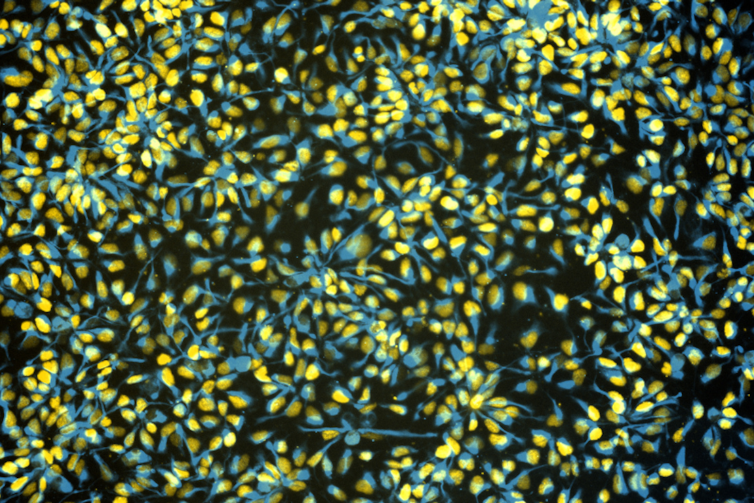
Wells, whose group is identified with the Wells Lab at UCLA, takes a different laboratory route: genome-wide association studies on human brain cells in a dish, to understand how cells change when they encounter harmful exposures such as toxins and viruses. Cells are the building blocks of tissues and organs, and how sensitive they are to environmental factors can affect health and disease risk. Stem-cell methods now let scientists model environmental effects on many cell types, including brain cells that are nearly impossible to study in living people without causing irreversible damage. The researchers obtain stem cells created from donors’ blood or skin and convert them into brain cells.
Most studies examine cells from only a handful of people, largely because cells from different donors have traditionally been handled and maintained separately. That adds considerable time, effort, and cost for every additional cell line. Limited scale means experiments often cannot capture natural human diversity or answer why an exposure might make one person sick and leave another unaffected.
The laboratory instead pools stem cell-derived brain cells from dozens to hundreds of people in the same culture dish, which the team calls a cell village. The cells’ genomes are used as natural barcodes to determine who donated each cell. Different environmental perturbations — pathogens, chemical pollutants, and radiation — are added, and each person’s cellular reaction is measured. A cell might turn a set of genes on or off, show an increased or decreased propensity to die, or do nothing at all. Genes linked to those responses can help explain the reaction and, in this framing, serve as biomarkers of how vulnerable a specific cell type is to an exposure.
Zika, lead, and other exposures
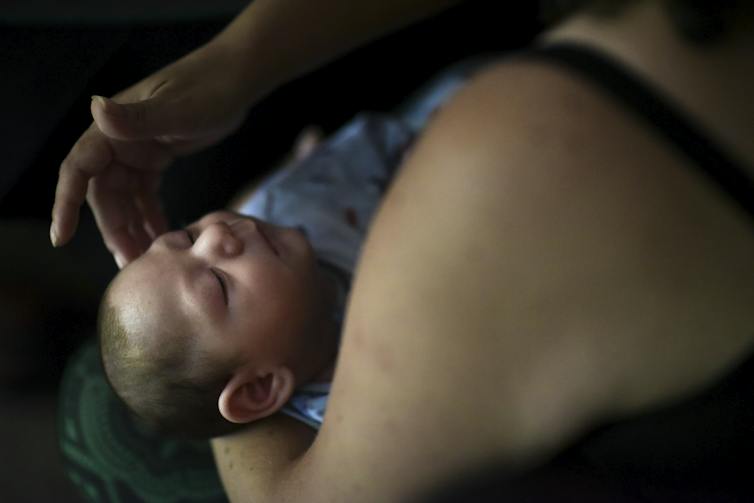
Cell villages are relatively new, but they have already been used to study differences between people. Using stem cell-derived brain cells from 40 people, Wells and colleagues found that not everyone was equally susceptible to Zika virus. Zika is spread by mosquitoes and can cause neurological disorders and microcephaly — small head size — in developing fetuses. For some donors, fewer than 1% of cells were infected; for others, infection was greater than 99%.
Further cell-village experiments identified a genetic variant that regulates IFITM3, described as a powerful antiviral gene. Cells from a person with version A of this gene were more vulnerable to infection than cells from a person with version B. Researchers have found links between this same genetic variant and the severity of COVID-19 and influenza A infection. Wells presents that overlap as suggesting the variant could be a genetic biomarker of how certain people respond to certain pathogens.
The team has conducted similar work to identify genetic biomarkers of sensitivity to lead, described as a pervasive neurodevelopmental toxin. It is also using cell villages to look for biomarkers of vulnerability to PFAS, also known as forever chemicals; to measles virus infection; and to stress hormones. The stated goal is an atlas of human vulnerability: a catalog of genetic biomarkers meant to predict how each person might respond at the cellular level to a wide range of harmful exposures.
Other technologies under study
Wells describes the cell village as only one of several emerging technologies that could change how biomarkers are detected. As DNA sequencing costs continue to fall, whole-genome sequencing could become more routine in the clinic and might improve the ability to find links between genes and health outcomes that healthcare teams can intervene in. Researchers are developing artificial-intelligence tools to survey CT and MRI scans with the intention of finding cancer-progression biomarkers that would likely have gone unnoticed by the human eye. Some studies have used cellphones, smartwatches, and other wearable devices to look for behavioral biomarkers that predict major depressive episodes.
The goal he describes now is to test how well these biomarkers work outside research settings and whether they can be made widely available, so clinicians have more information when making consequential decisions. The work is presented as research still being tested, not as a basis for diagnosing or treating any individual.