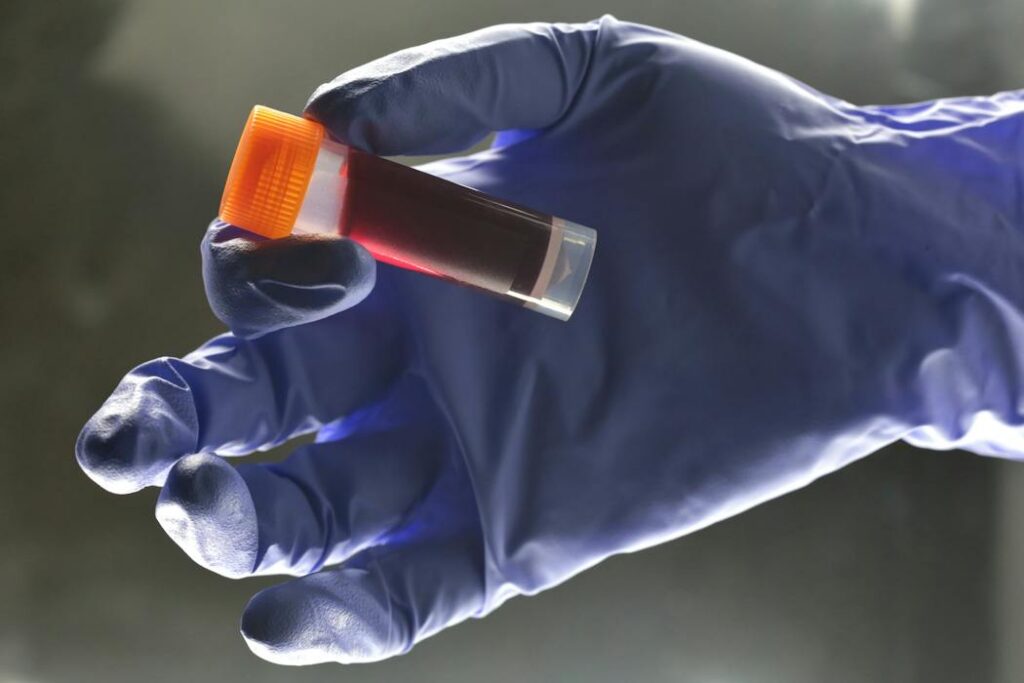
On September 23, 2026, an advisory panel to the U.S. Food and Drug Administration voted to recommend approval of Galleri, a blood test from the biotech company GRAIL that is offered as a way to screen for more than 50 cancers in one blood draw before symptoms appear. A panel recommendation is not FDA approval. Writing on November 9, 2026, physician Andrew Wolf said the agency had not announced when it would decide.
Wolf, who studies early cancer detection and chairs the American Cancer Society’s screening guideline development group as a volunteer, wrote that the test shows promise but has not been shown to lower the risk of dying from cancer or to prevent advanced cancer. He said the opinions in his assessment are his own and do not necessarily reflect those of the American Cancer Society. Requests for comment from GRAIL were not returned.
Cancer is not the leading cause of death in the United States; heart disease ranks first. Wolf noted that cancer treatment is often highly toxic, that cancer is increasingly diagnosed at younger ages, and that it accounts for more years of potential life lost than heart disease.
What the test does
Galleri is one of a class of multicancer early detection tests. It does not diagnose cancer. A positive result still requires further evaluation to determine whether cancer is present and, if so, what type.
The test looks for DNA fragments in blood that are associated with cancer, specifically methylation markers on cancer DNA, and uses machine learning to return a positive or negative result. It looks for signals from more than 50 cancers, including 12 that account for almost two-thirds of U.S. cancer deaths, such as lung and pancreatic cancer, and it estimates which organ a possible tumor likely came from. Routine recommended screening is largely limited to four cancers, so many of the cancers Galleri targets have no standard screening test.
Reported strengths
Wolf reported a false-positive rate of about 0.5%, or about one person in 200 incorrectly identified as having cancer. He contrasted that with false-positive rates in the 10% range for some recommended tests, including the Cologuard stool test for colorectal cancer. A false positive can lead to more testing that is costly, sometimes risky, and often worrying.
Across three annual screens, the positive predictive value was 52%, meaning more than half of positive results led to a cancer diagnosis. Wolf wrote that the positive predictive values of most recommended screening tests—stool tests for colorectal cancer, mammography for breast cancer, and HPV testing for cervical cancer—are typically below 10%.
In a study of 32,000 U.S. adults age 50 and older who received Galleri, cancer was diagnosed in about 0.5%, or 173 patients. Among those patients, the test correctly predicted the cancer type in 91%, which could help clinicians choose more targeted follow-up rather than searching the whole body.
Limits of the evidence
Across all stages, detection over three annual rounds of screening was less than 31%, so the test missed 69% of cancer cases. The early-stage detection rate over those three years was 21%, meaning almost 80% of early-stage cancers were missed. Of the cancers found when Galleri screening over three years was compared with routine screening, 60% in the Galleri group were early stage—almost the same share as among people who did not get the test. Wolf wrote that Galleri did not perform any better than standard screening at finding cancer early, and that a negative result can falsely reassure people. Cancer is most curable at early stages.
The trial’s main goal was to show fewer late-stage cancers over three years of screening, and it did not meet that goal. There was a hint that stage 4 cancer was trending lower by the third year, but Wolf wrote that more time is needed to tell whether that pattern is real and, if so, whether it reduces deaths. There is no evidence yet that the test lowers the risk of dying from cancer.

How the advisory panel voted
The panel took three votes.
It voted 10–0 that the test is safe. A blood draw itself is usually low risk, but a positive result can lead to further tests, including biopsies, that carry more risk and cost. About half of positive results are false alarms. One study of Galleri’s safety found that 0.6% of people tested went on to an invasive diagnostic procedure and that none had serious complications. Wolf wrote that the safety vote appeared warranted on that basis.
It voted 6–4 that the test is effective. A number of yes votes were cast on the condition that “early” be removed from the “multi-cancer early detection” label. Panel members were not convinced the test finds cancers at their earliest, most curable stages, and they were uncertain about benefit at this time. Wolf wrote that available studies do not support an effectiveness claim: the test has not been shown to reduce late-stage cancer, performs poorly for early-stage disease, and has no evidence of lowering cancer deaths.
It voted 7–2, with one abstention, that benefits outweigh risks. Wolf questioned how benefits can outweigh risks if benefit has not been proved, even when direct risk from the blood draw is low. The panel acknowledged serious limitations and still recommended approval. One member said that finding more early-stage cancers in a broader population would be a benefit even though that has not been proved, adding, “So perhaps my ‘yes’ is a hopeful (vote) rather than an accurate one.” Wolf wrote that hope does not reduce death and disability from cancer.
Coverage, cost, and proven screening
If the FDA agrees with the panel, Galleri would likely be marketed more widely. FDA approval would not guarantee insurance coverage. The Centers for Medicare and Medicaid Services has a separate coverage process and is not required to cover an FDA-approved test. The out-of-pocket price was US$949.
Wolf wrote that it remains unclear whether the test can reduce the chance of dying from cancer or of being diagnosed with advanced cancer. He said people who are willing to pay the annual cost, to accept further testing despite a high rate of false alarms, and not to be overly reassured by a false negative can ask their doctor for more information. He also wrote that doctors and researchers are certain about staying up to date with recommended screening for colon, breast, cervical, and lung cancers even if someone also uses Galleri, because those tests are proven to find early-stage cancer and to lower the risk of dying from those cancers.