
In an explanation published on November 12, 2026, researchers Meagen Rosenthal and Natalie Minton describe “food is medicine,” also called “food as medicine” or “food prescriptions.” Their work focuses on food access and health in rural communities, and they have run these programs in northern Mississippi.
They start from a broad body of research on diet and health: eating habits can harm health, and a healthy diet can help people with chronic conditions such as Type 2 diabetes, heart disease, and high blood pressure. In this approach, a clinician prescribes healthy food—fruits, vegetables, and sometimes healthy proteins—to help prevent, manage, or treat specific clinical conditions. The point of a food prescription, they write, is to treat food as being as important as medication for health and wellness.
How the programs work
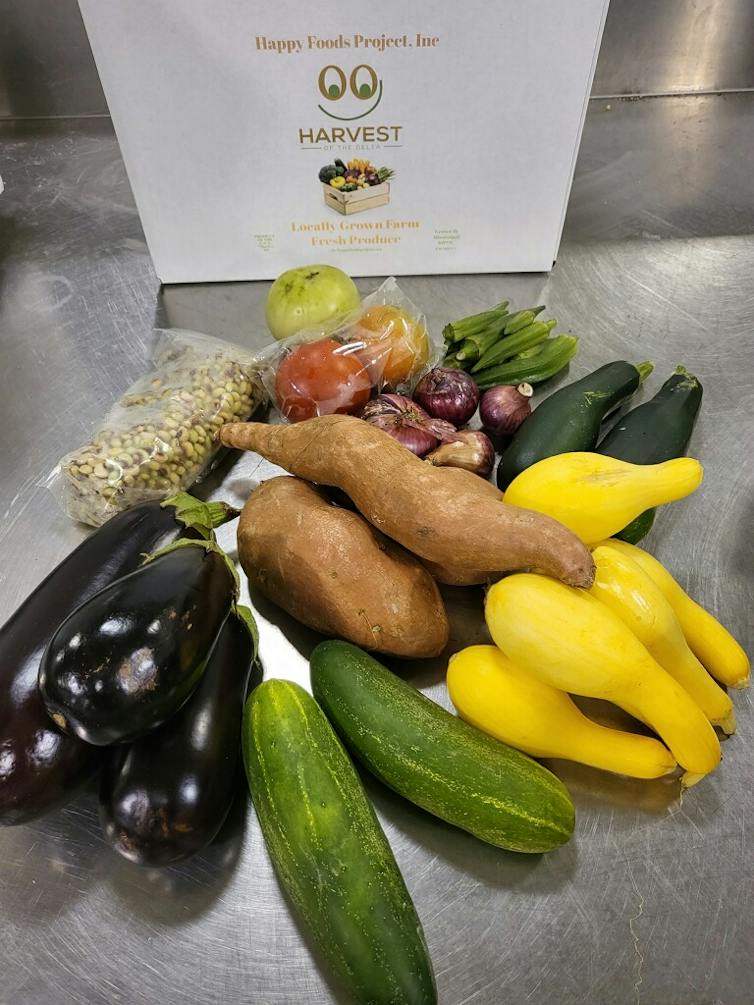
Programs may use curated food boxes, grocery vouchers, or medically tailored meals. Most are collaborations among nonprofit organizations, health clinics, and healthcare providers. The stated goals are to improve health, especially for people with chronic conditions, and to reduce healthcare costs.
The researchers say the programs have also become a support for people facing food insecurity. They report that in 2024 more than 47 million Americans, including 7.3 million children, lived in food-insecure households, meaning that at some point the household was uncertain of having, or did not have, enough food for everyone. Internationally, they put the number of people experiencing hunger at roughly 673 million. Rural residents, they note, are more likely to be food insecure because local grocery stores have closed and because of distance from urban centers.
Unlike a food bank, these programs provide only healthy foods, often chosen by a dietitian. Dietitians also often help patients with chronic illness read labels and decide what fits their health needs.
Older idea, newer attention
The researchers say the idea is not formally connected to the “Make American Healthy Again” movement, but that U.S. Health and Human Services Secretary Robert F. Kennedy, Jr. has brought new attention to it. In January 2026, they write, the second Trump administration launched a campaign encouraging Americans to “Eat Real Food.” That campaign is separate from a formal medical standard.
They trace the movement itself to more than 60 years ago. One early prescriber was civil rights activist Dr. Jack Geiger, whom they describe as a multiple Nobel Peace Prize winner. In the 1960s he co-founded community health centers in South Boston and the Mississippi Delta. When government officials criticized him for prescribing food to patients in the Delta, Geiger replied, “The last time I looked at my textbooks, the most specific therapy for malnutrition was food.”
Since then, they write, thousands of community organizations, including Community Servings and Project Open Hand, have provided healthy food to vulnerable residents.
In 2023, the president of the American Heart Association convened an advisory group of researchers and physicians to review the research and suggest next steps. As Rosenthal and Minton recount it, that advisory suggested the programs could help prevent or manage chronic conditions and estimated savings to the U.S. healthcare system of US$4.3 trillion a year. That figure is the advisory’s estimate, as reported by the authors, not a demonstrated result.
They also describe growing international interest. In 2025, the Rockefeller Foundation supported a meeting of scholars, policy experts, and practitioners that established the Food Is Medicine Global Alliance. The organization plans to help integrate, sustainably finance, and routinely deliver these programs worldwide by 2030. So far, the authors say, it has released reports on the current landscape and resources for providers who want to start programs. Those are plans and early products, not completed worldwide delivery.
What the authors found locally
Food may come from local farms or grocery stores, and how it reaches patients varies. The four projects Rosenthal and Minton had run by the time of their account were relatively small and local.
One was a food-box pickup that added fruits and vegetables for 55 households whose members showed food insecurity. They followed participants for two years and found statistically significant reductions in weight, waist circumference, and triglyceride levels among the primary adult participants.
For two other programs, including one that was still ongoing, they partnered with local farmers. One was a pilot delivery of food boxes to housebound people. Both recipients and farmers reported high satisfaction. The authors say participants felt the program strengthened community connections and supported local farm livelihoods.
What wider research shows—and does not
The authors cite one recent large literature review that identified 14 trials of food-is-medicine interventions and found that these approaches often improved diet quality and food security. Another review, focused on people with diabetes, found significant increases in fruit and vegetable intake and reductions in blood sugar. They say those findings align with their earlier results.
They also stress the limits. Effects on long-term health outcomes have been inconsistent, partly because many trials have been too small or not rigorous enough to show causation. In some cases the “dose”—how much food is provided—is limited by grant funding. Their pickup project supplemented only four to five meals a week, which they say may have been too little to improve every health outcome they measured.
They argue that researchers also need to account for how programs work in different local food environments. They point to changing weather patterns and, more recently in their account, delays in fuel and supplies from the Strait of Hormuz, which they say have raised prices of staples such as cereals and vegetable oil and led to cooking-oil shortages in some countries.
Food is medicine can seem intuitive, they write, but larger, higher-quality studies are still needed to track clinical outcomes across program types. If those studies show benefit, they suggest healthcare could come to treat access to healthy food as essential for patients with chronic illness, alongside medications. That remains a possible shift, not a current standard of care.
These findings describe program research and population-level patterns. They are not a personal diagnosis or a prescription for any individual reader.
Rosenthal reports funding from the State of Mississippi and the U.S. Department of Agriculture. Minton reports funding from the U.S. Department of Agriculture’s Southern Sustainability and Education Research.