
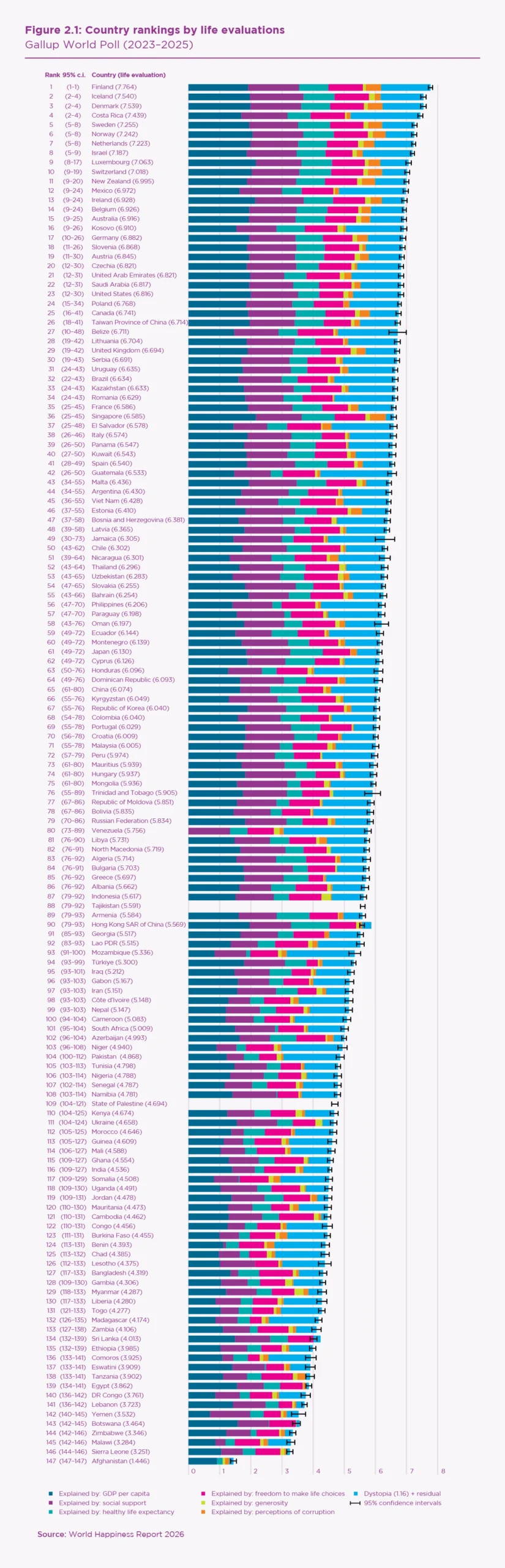
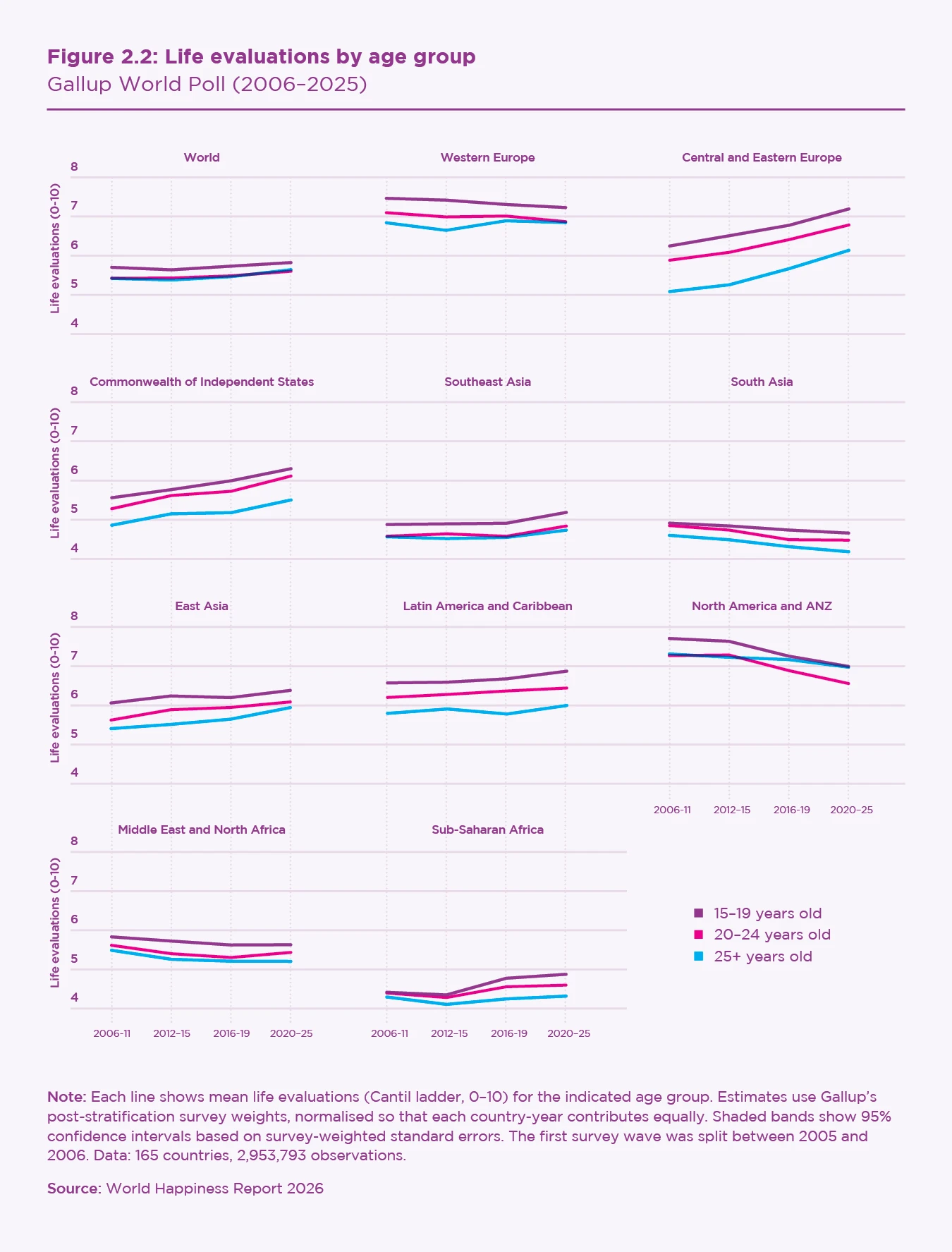
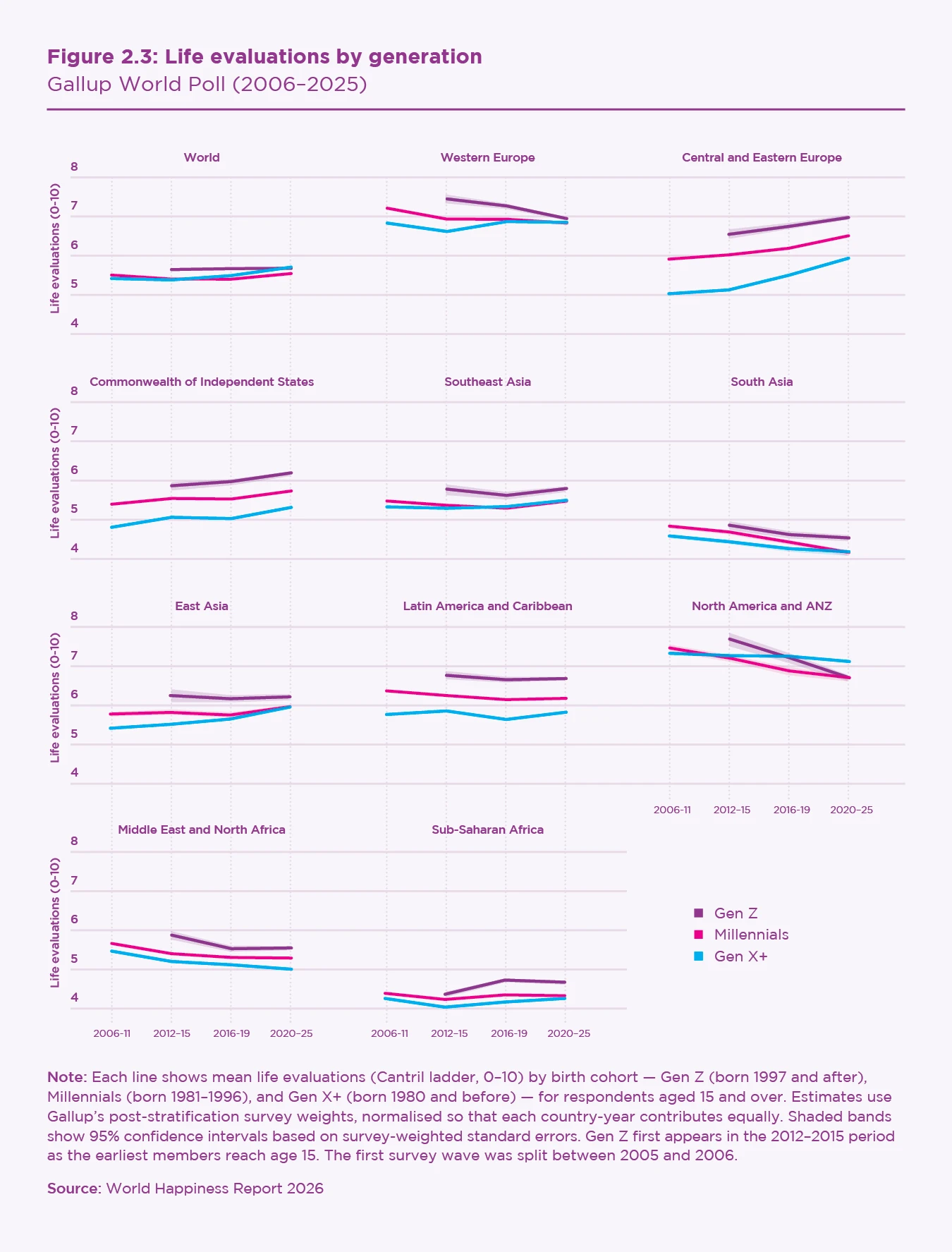
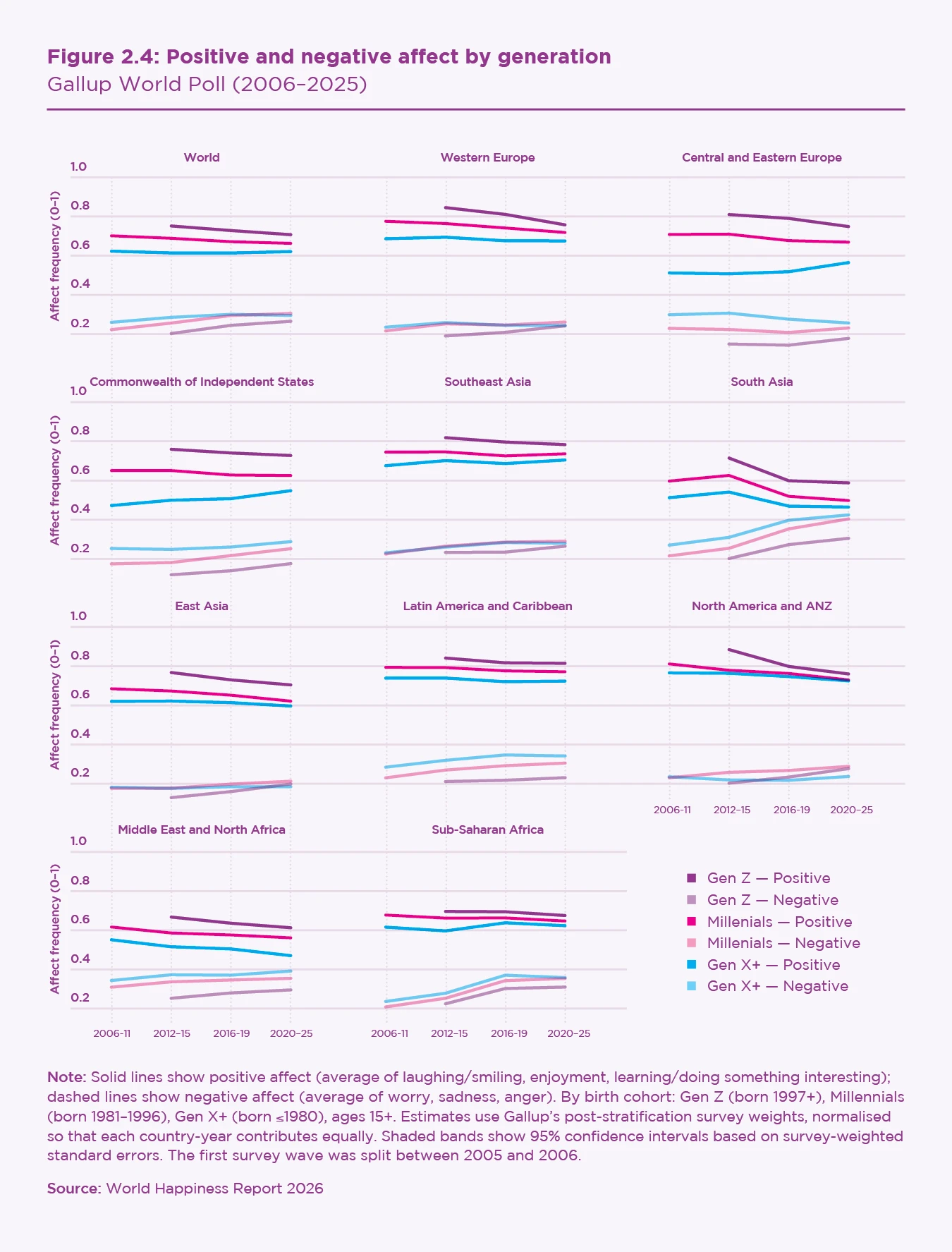
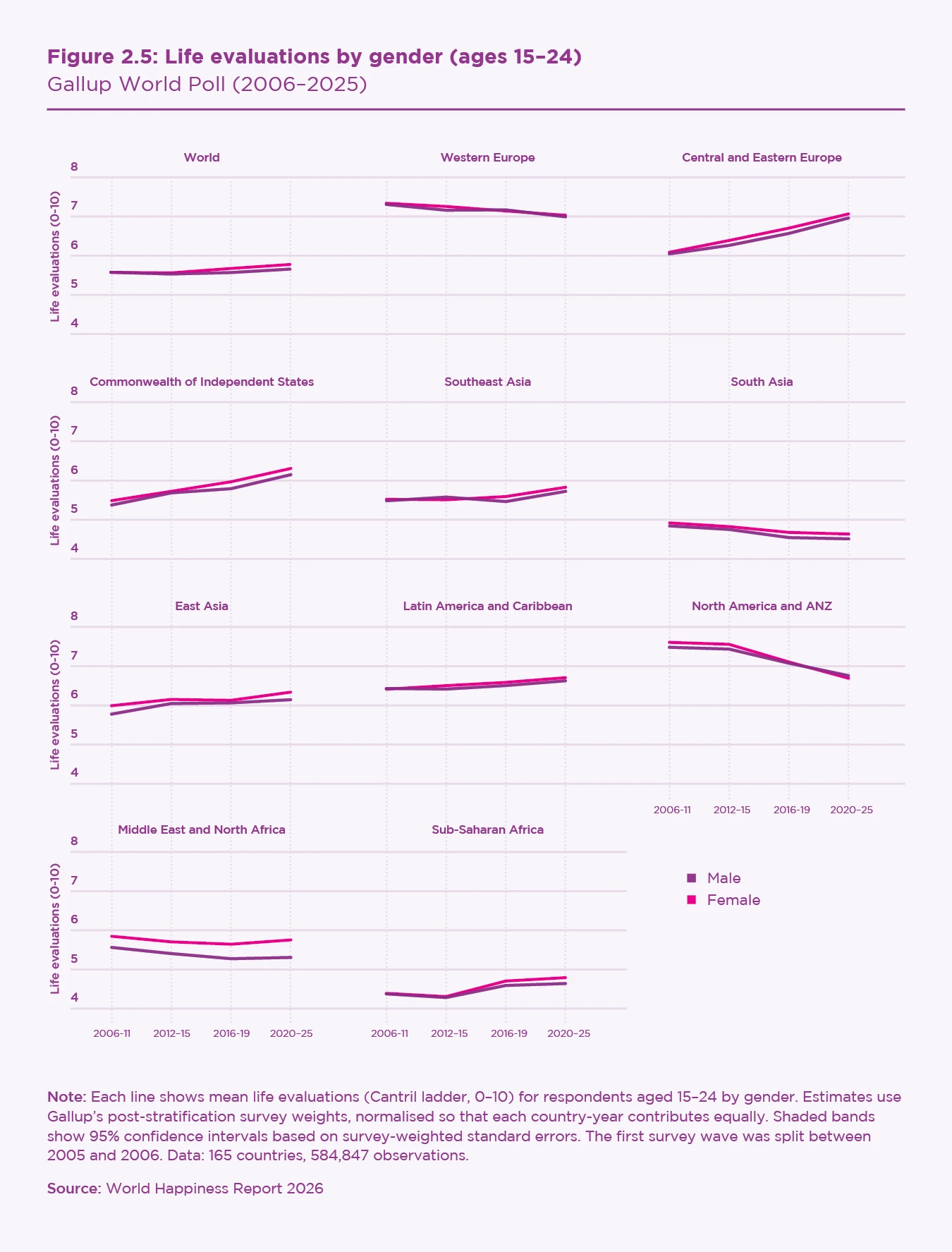
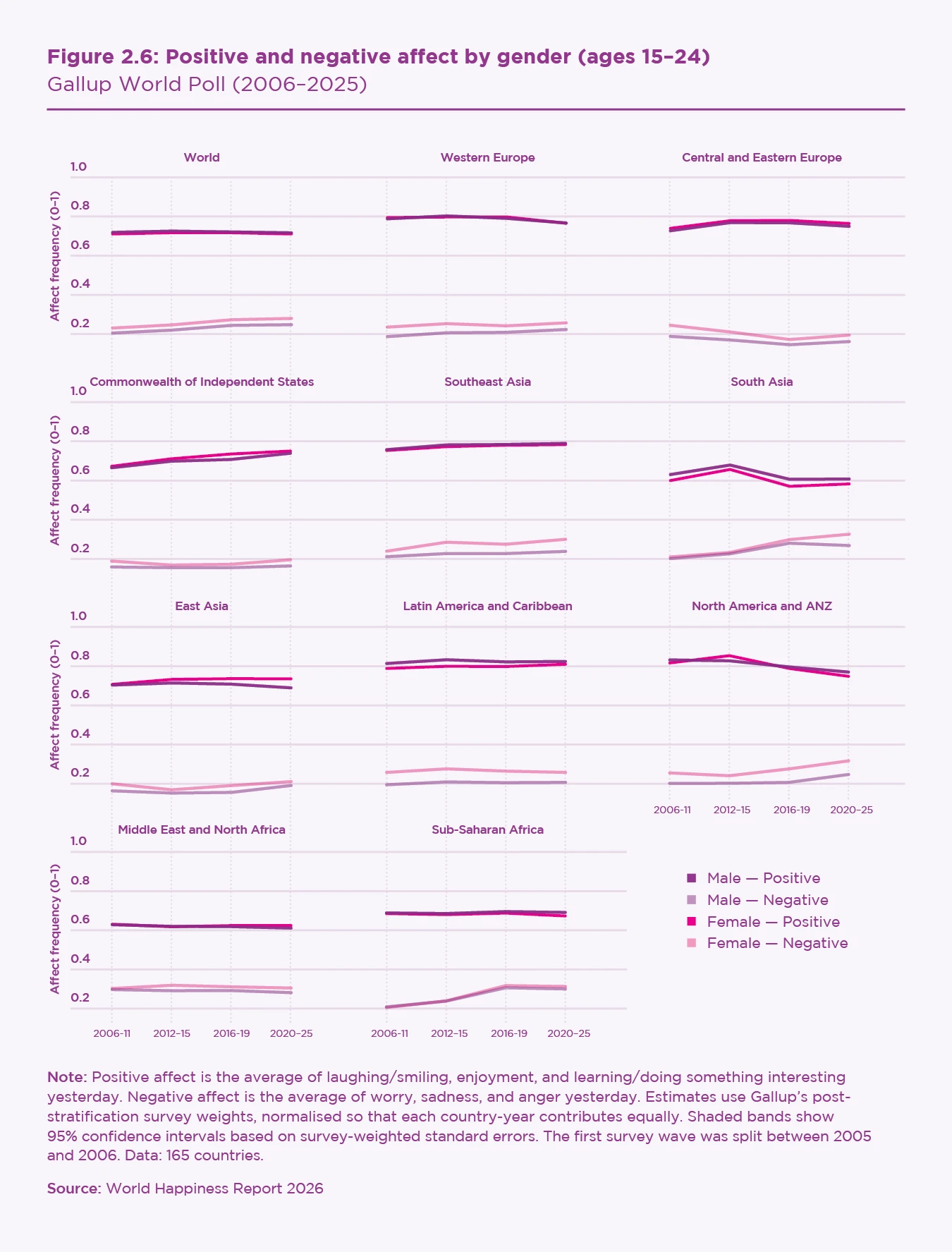
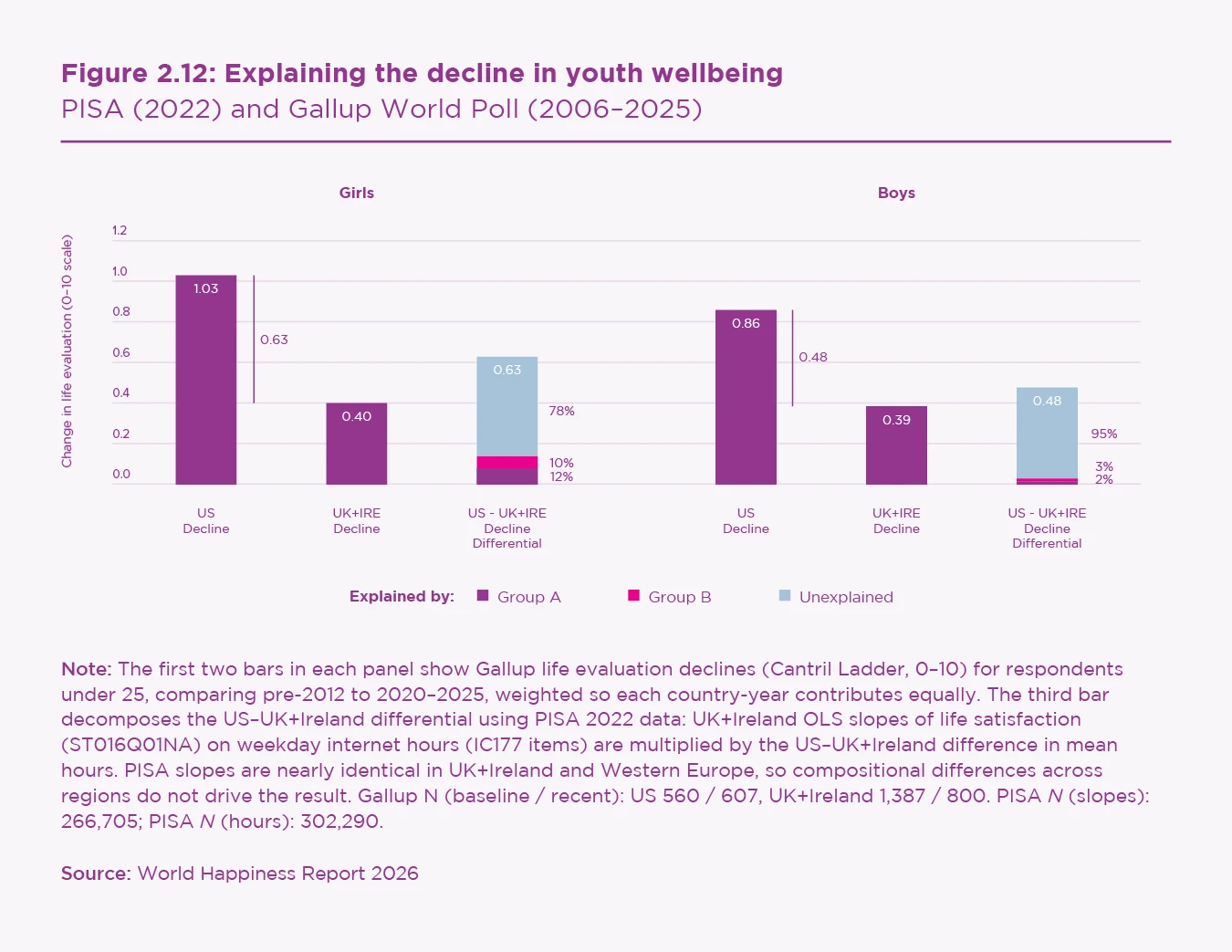
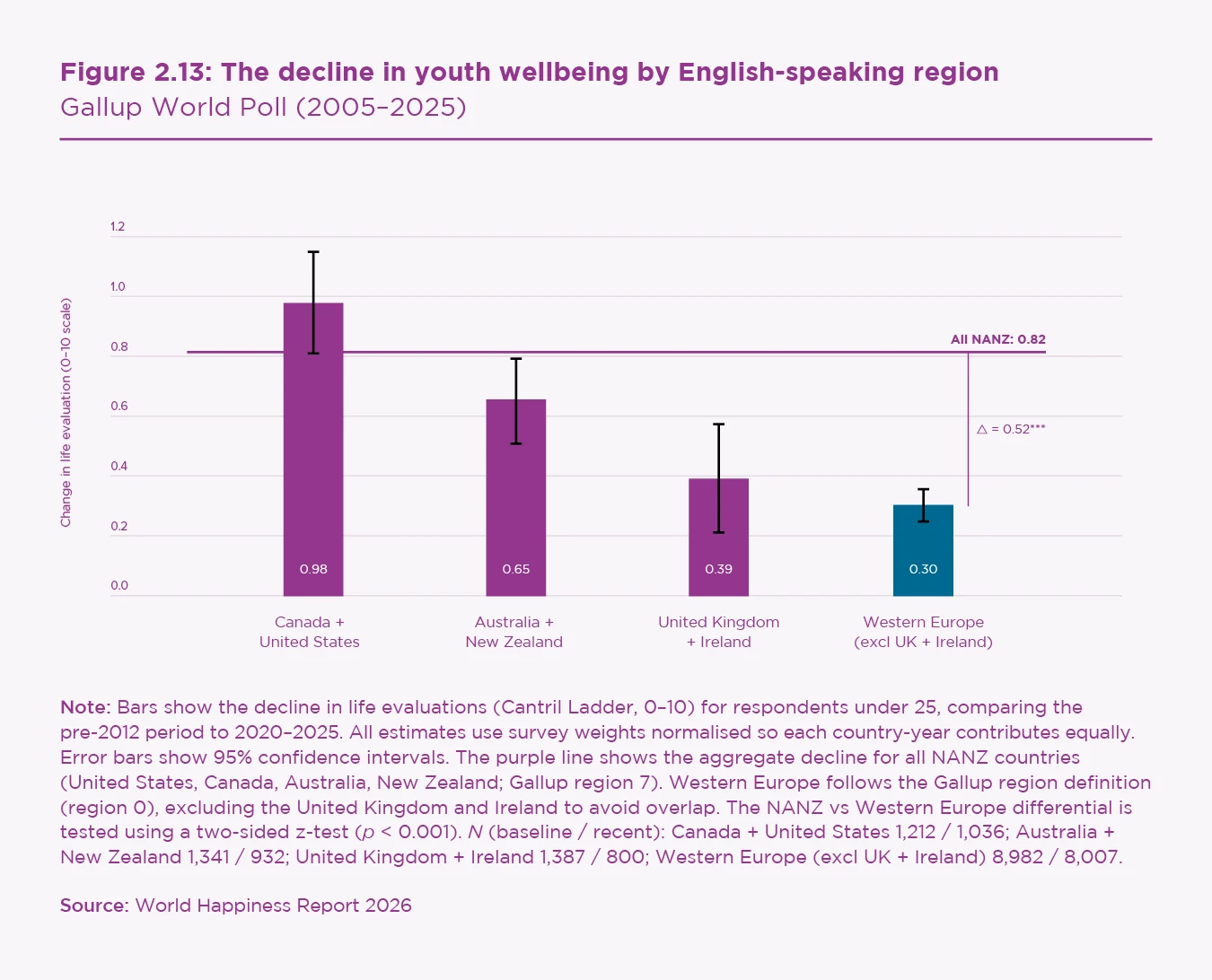
In a chapter recorded as published on January 1, 2026, the World Happiness Report examined whether social media use helps explain changes in young people’s wellbeing across countries. Its central finding is not a single global decline: among 136 countries with comparable data, life evaluations for people under 25 were higher in 85 countries in 2023–2025 than in 2006–2010. By contrast, they fell by an average of 0.86 points on a 0–10 scale in the United States, Canada, Australia and New Zealand.


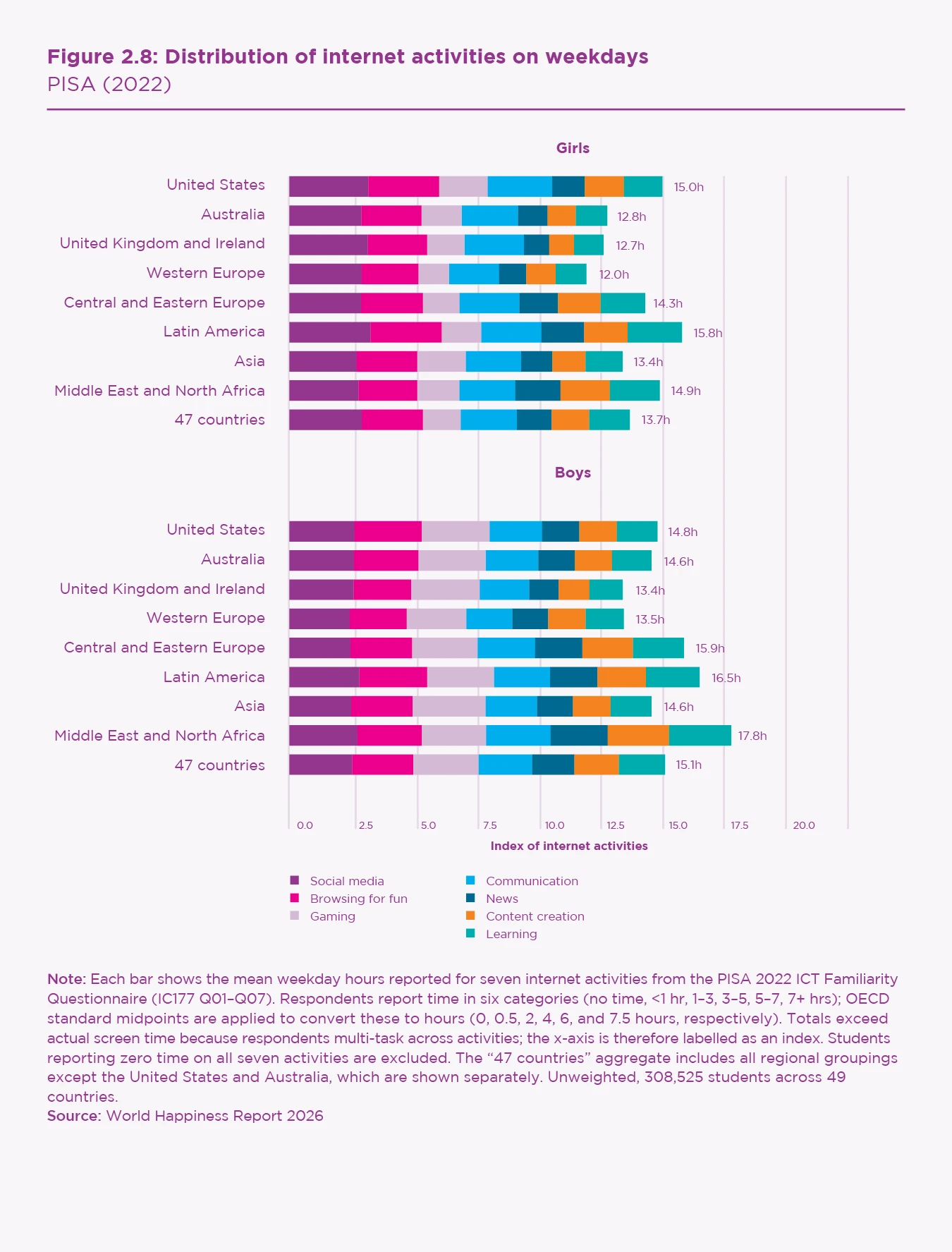
The report cautions against treating social media use alone as an explanation for that difference. In a 2022 survey of 15-year-old students, data linking internet activities to life satisfaction were available for 47 countries—but not for those four countries. Across the 47-country sample, higher reported use of social media, gaming and browsing for fun was associated with lower life satisfaction, particularly among girls. Communication, news, learning and content creation showed smaller declines at high levels of use. These are correlations, not evidence that any activity caused a change in wellbeing.
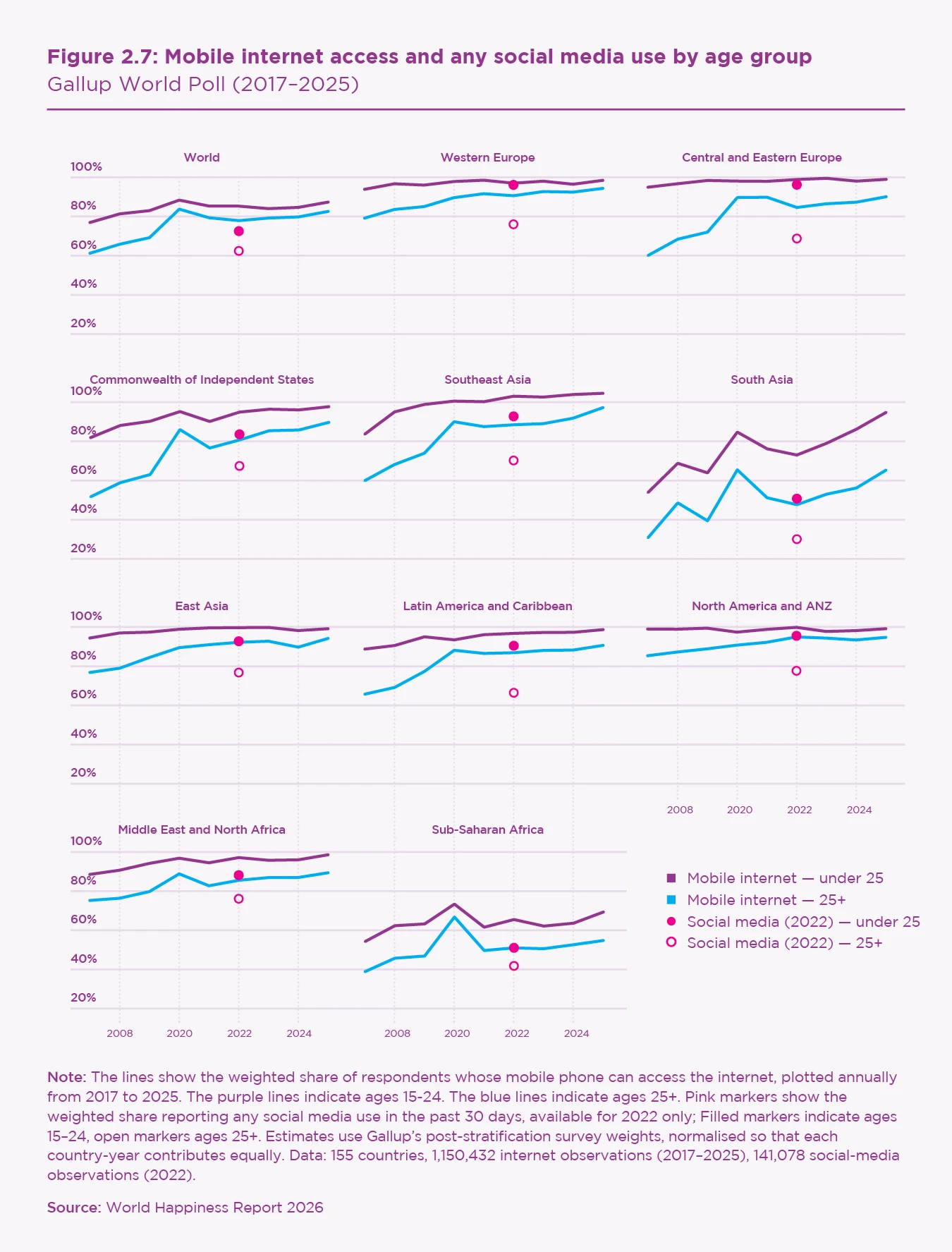

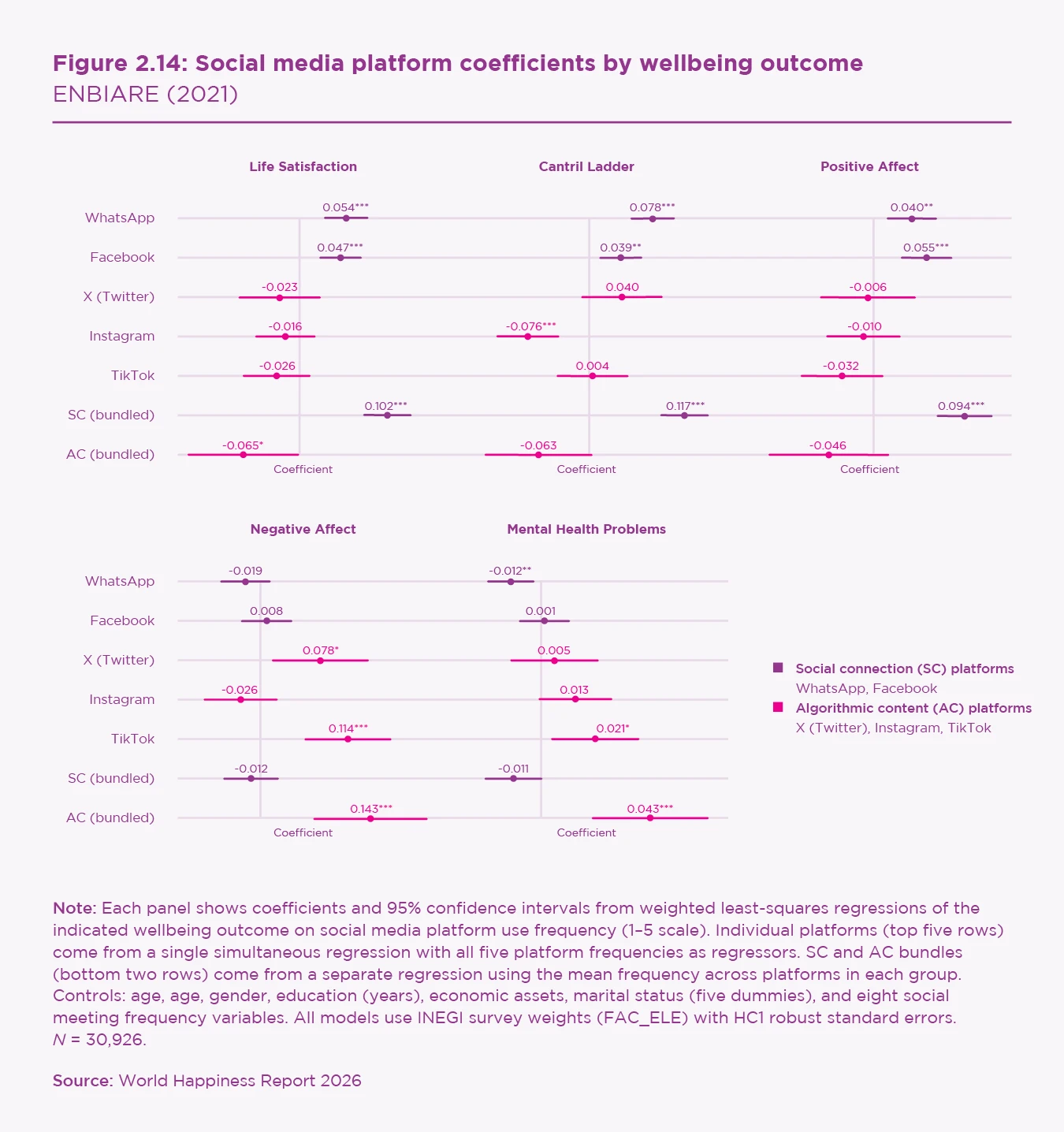
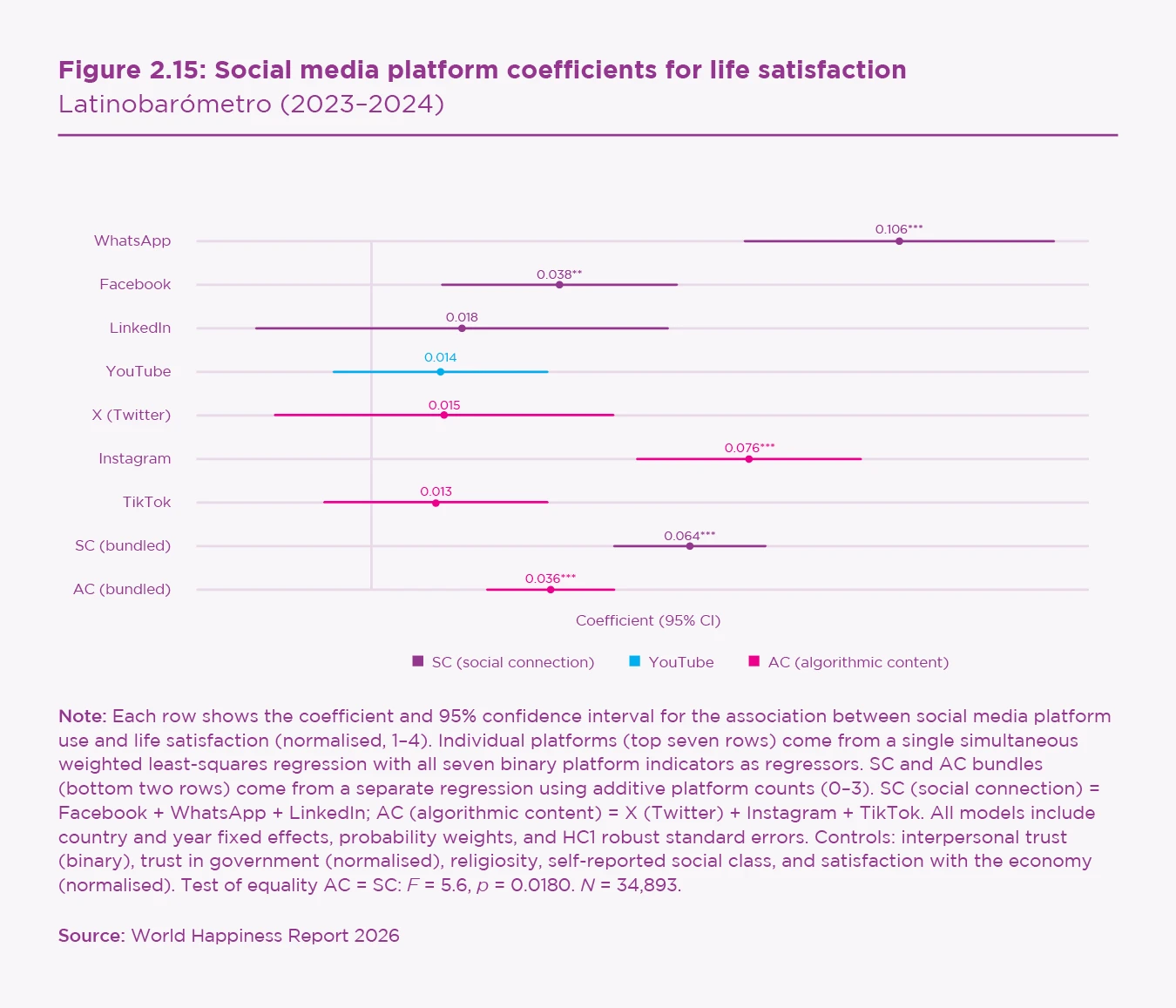
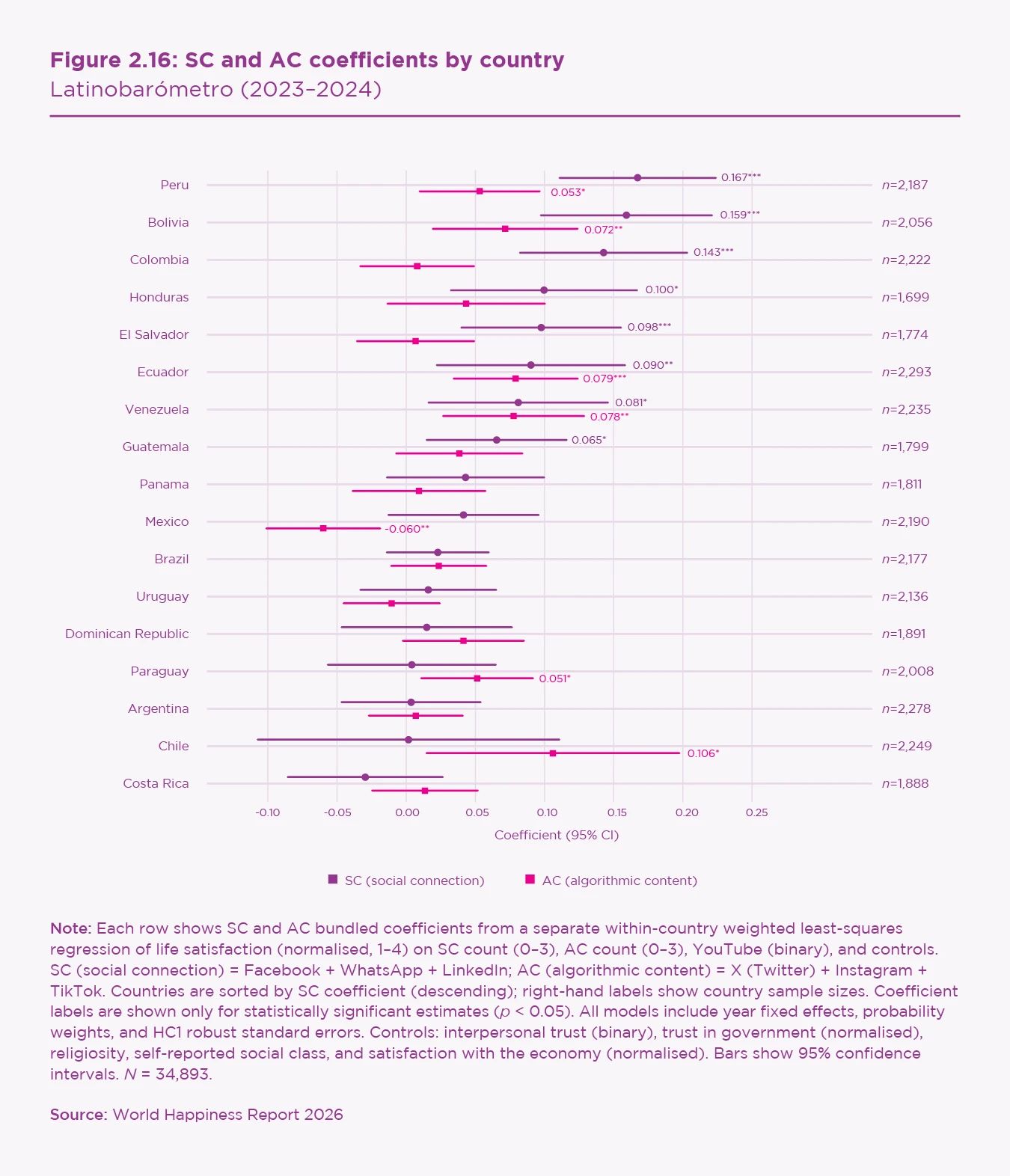
Surveys from Mexico and 17 Latin American countries also found that the associations differed by platform. Platforms the report grouped as emphasizing social connection, including WhatsApp and Facebook, generally had more favorable associations with wellbeing than platforms it grouped as emphasizing algorithmically curated content. Those results do not establish that a particular platform improves or harms an individual’s mental health.
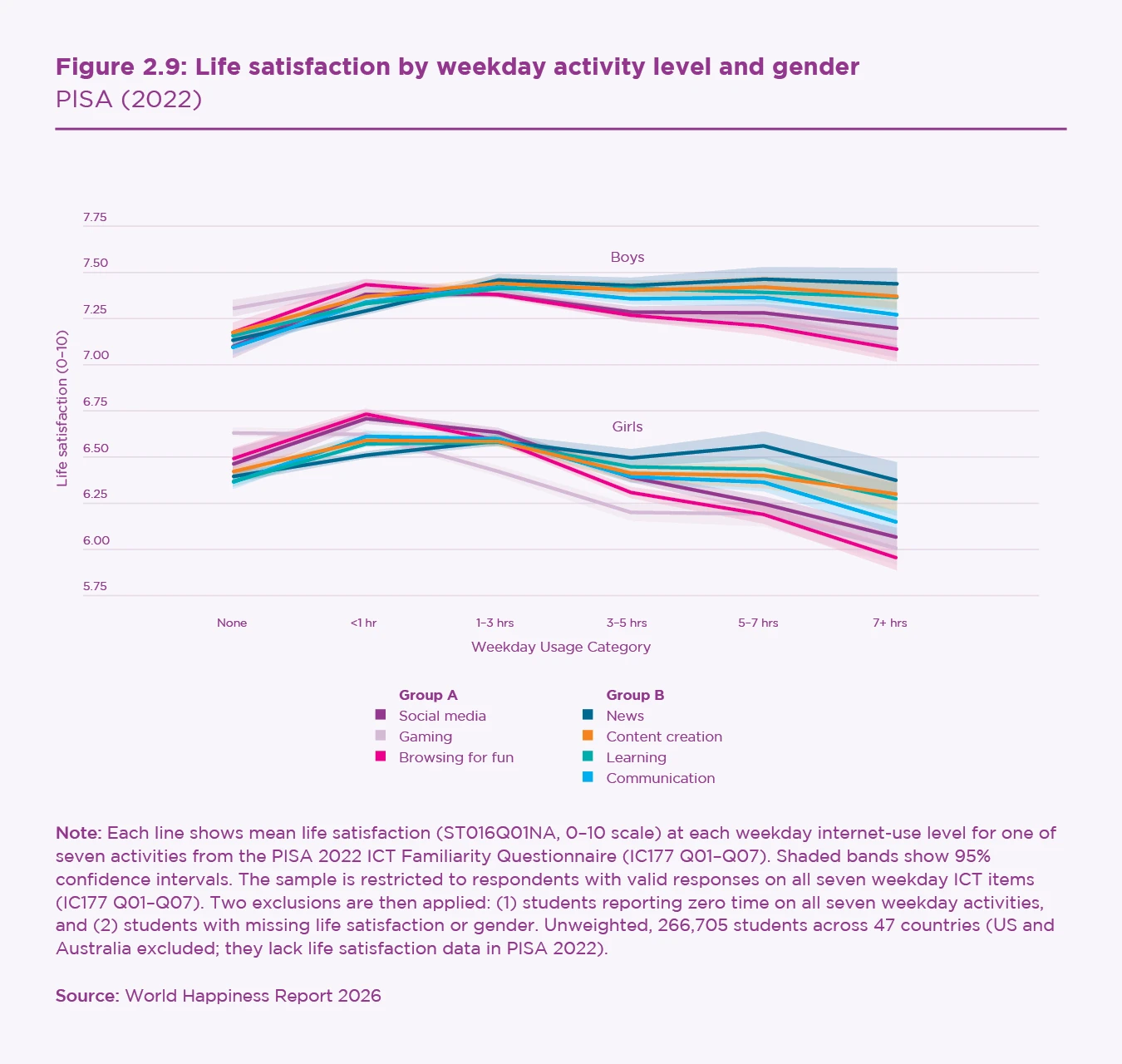
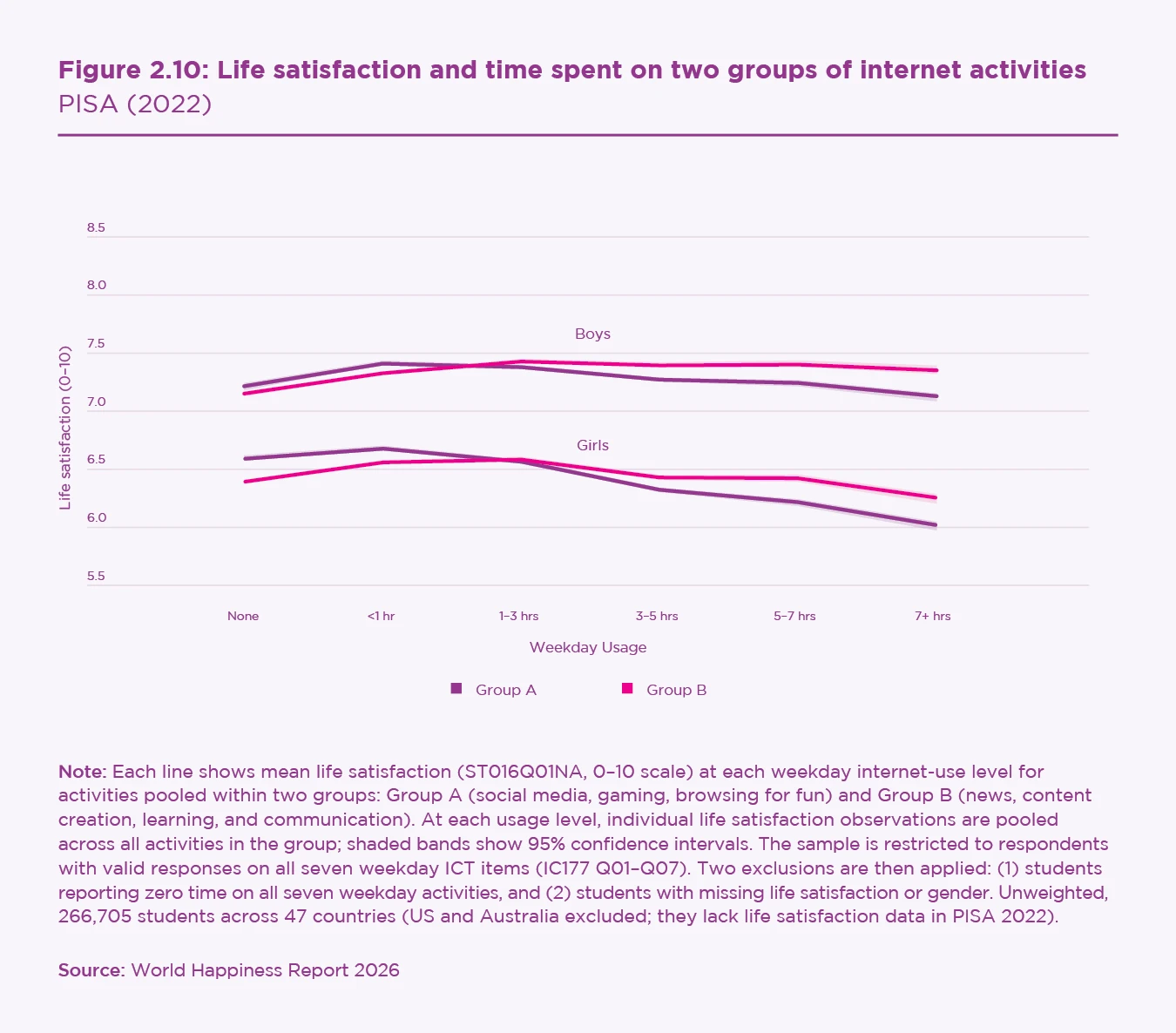
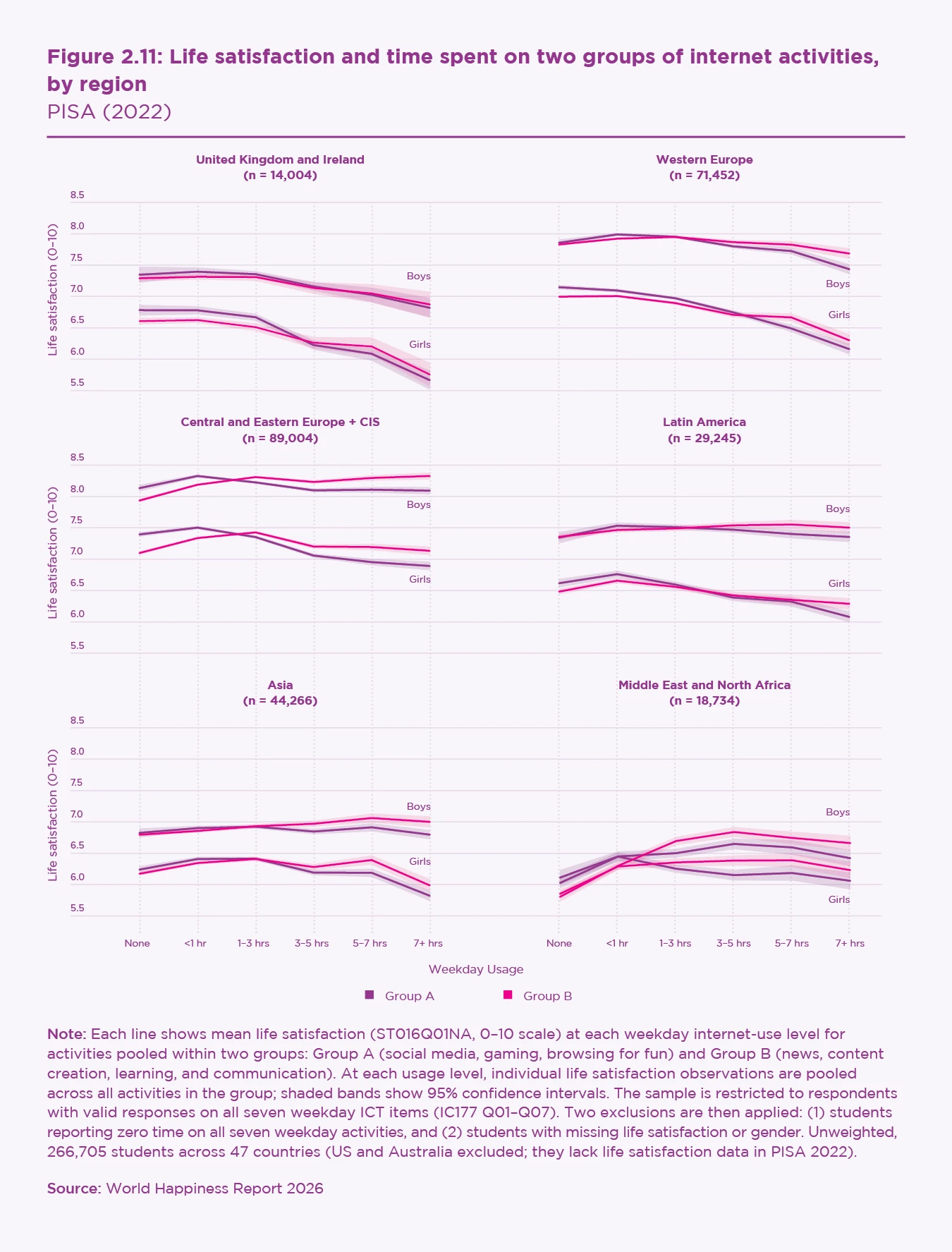
The report also compared social media use with students’ sense of belonging at school. Among girls in the UK and Ireland, the life-satisfaction difference associated with moving from low to high school belonging was four times the difference associated with moving from high to low social media use. In the 47-country sample, it was six times as large. The authors stress that belonging, social media use and life satisfaction may influence one another, so these comparisons should not be read as causal effects.

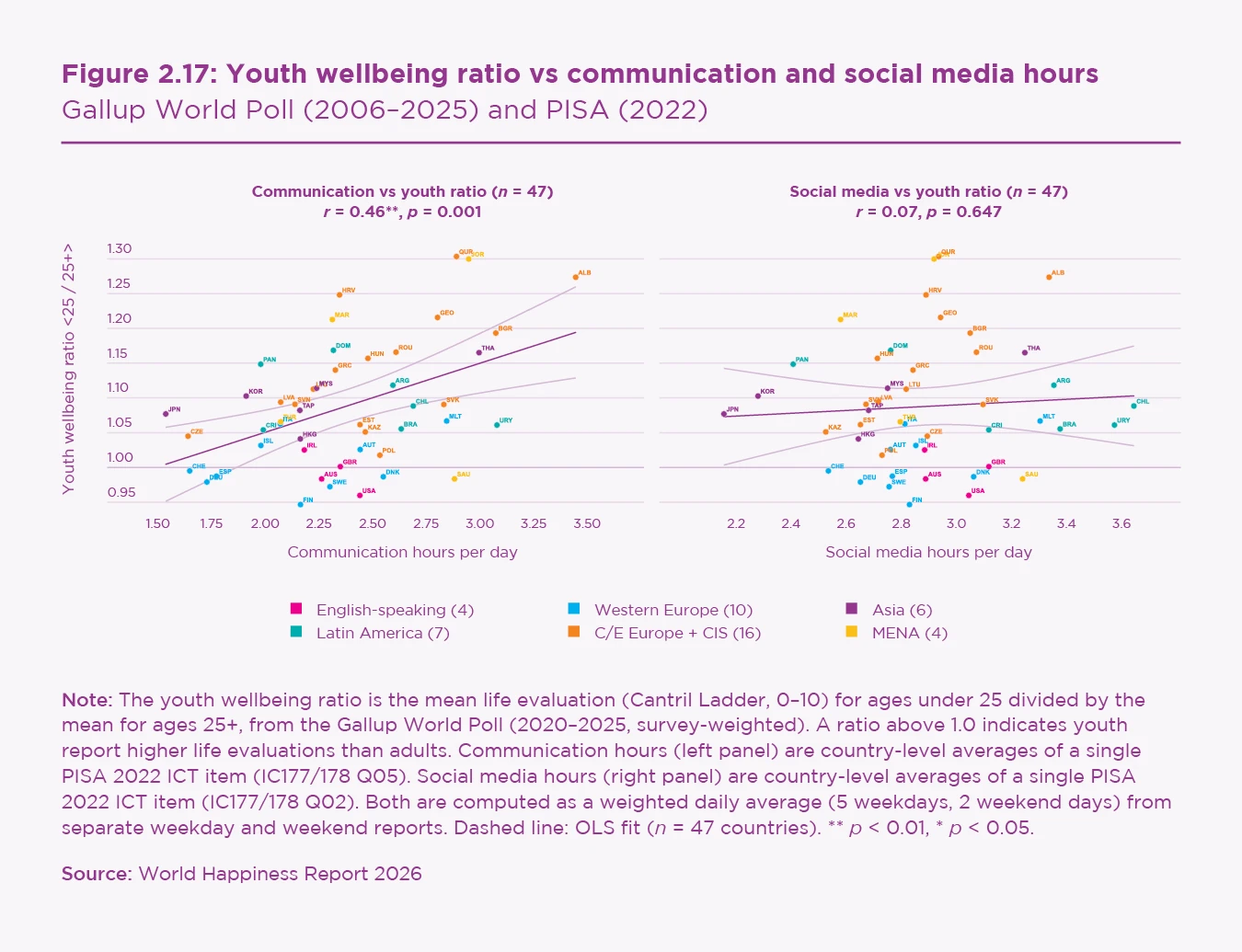
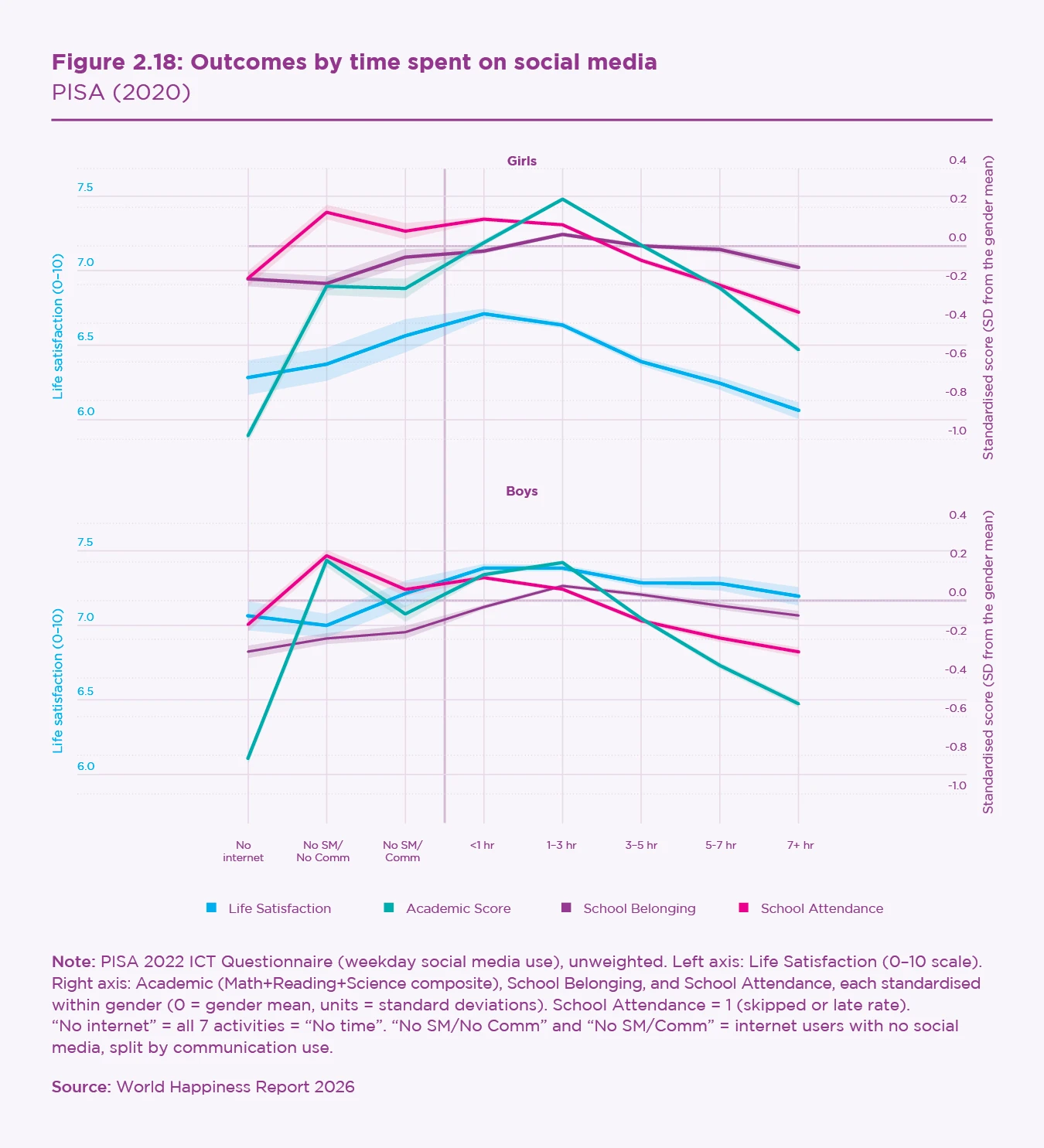

Taken together, the evidence suggests that how young people use digital platforms—and the social settings around them—matters more than a simple count of social media hours. It does not establish why youth wellbeing fell particularly sharply in the four countries.