
A chapter published on January 1, 2026, examines a puzzle in social media use: some people value access to a platform when others use it, yet would prefer a world in which no one in their community used it. Drawing on three studies, the chapter argues that the social cost of opting out may help explain why people stay.

In one US survey discussed in the chapter, current Facebook users said they would pay a median of $5 a month to use the platform, but would require a median of $99 a month to stop. Those answers are not direct measures of wellbeing: a proposed charge for a previously free service and compensation for giving one up may prompt different responses.
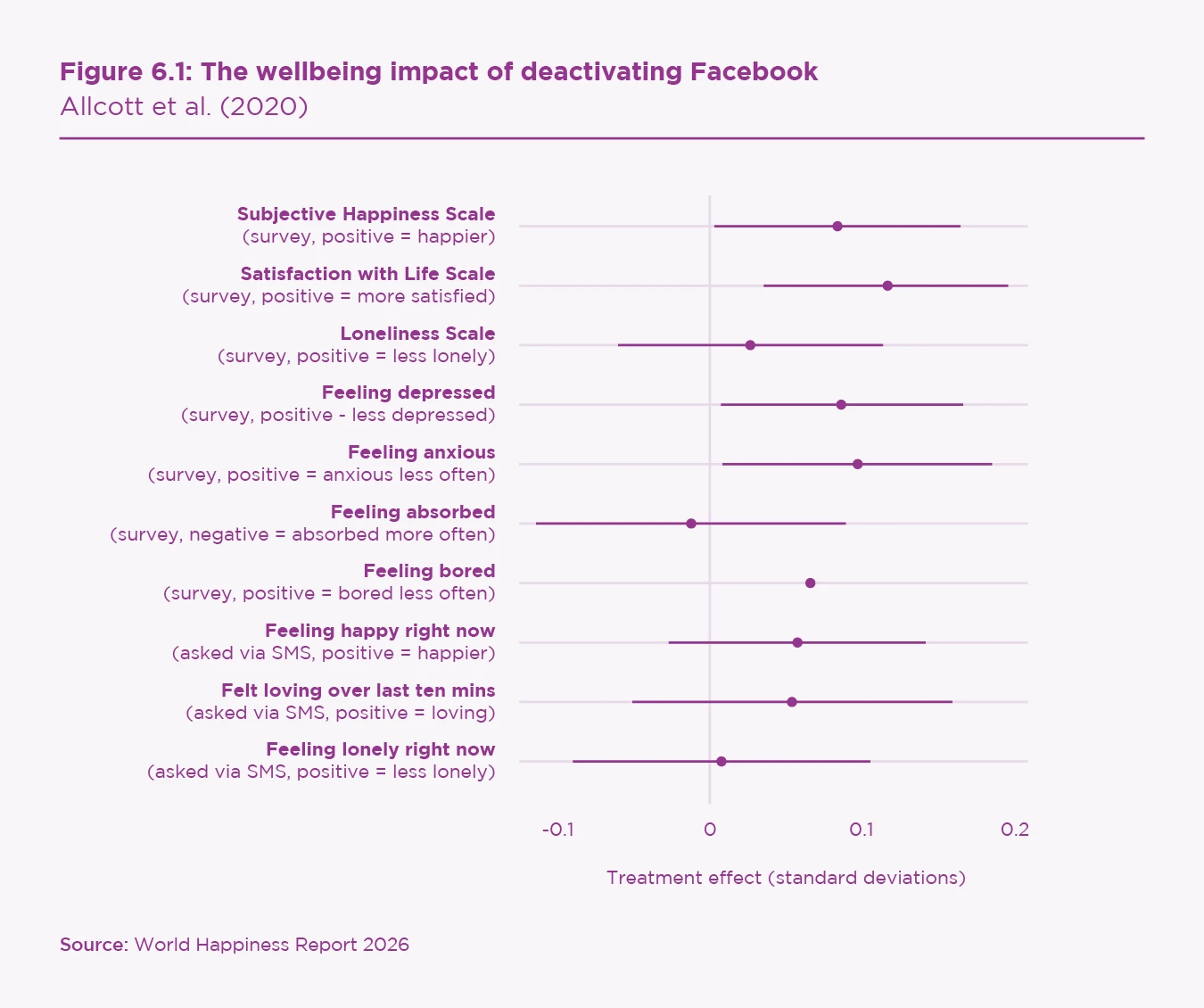
A separate randomised study recruited 2,743 Facebook users. Among participants eligible for the study’s four-week comparison, those paid to deactivate reported small but statistically significant improvements in happiness, life satisfaction, anxiety and depression measures compared with those who stayed on Facebook. They nonetheless asked for a median of about $86 to remain off for another month. The chapter offers possible explanations—including valued connections and information—but says the reason is not established.


In a third study, US college students said they would require an average of $59 to leave TikTok for a month and $47 to leave Instagram. When asked instead about a month in which everyone in their academic community would deactivate, they were willing to pay an average of $28 for TikTok and $10 for Instagram. The researchers call this a possible “product trap”: leaving alone may carry a social cost that disappears when peers leave too.

These findings concern the people and periods studied. They do not show that every user is worse off on social media, or that deactivation is a treatment for anxiety or depression.