A plan to exercise, read or cook at home can be easy to make and hard to carry out. A guide published on 22 July 2026 argues that the answer is not simply more willpower: it is to make the start of a routine easier to repeat.
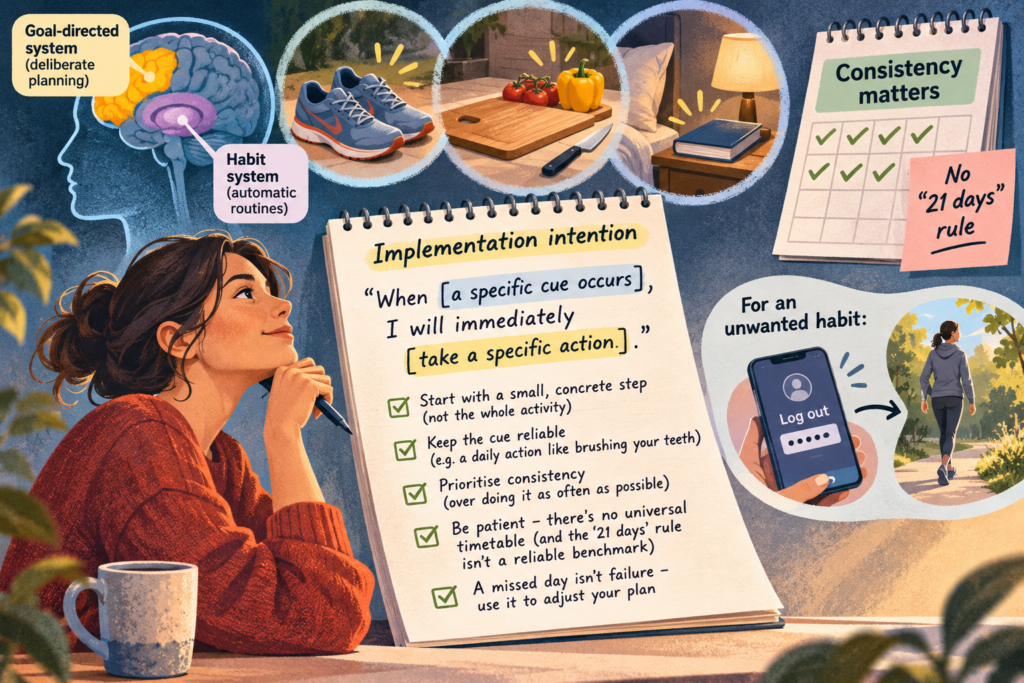
The guide distinguishes a habit from a whole activity. Running a 5K or preparing dinner still involves decisions and effort. But a smaller step—putting on running shoes or taking out a chopping board—may become more automatic when it follows a reliable cue.
One way to plan that step is to complete a sentence: “When [a specific cue occurs], I will immediately [take a specific action].” For example: “When I get into bed, I will pick up the book on my nightstand.” The commitment is to begin, not to finish a chapter. For someone whose schedule changes frequently, the guide suggests choosing a cue that travels with them, such as brushing their teeth, rather than a fixed time or place.
Consistency matters, but there is no universal timetable. A 2023 machine-learning study discussed in the guide examined millions of gym visits and hospital handwashing events. It found different timescales for these behaviours: handwashing patterns could develop over weeks, while gym-going patterns typically took months. Those findings do not establish a deadline for any individual habit, and the familiar “21 days” rule is not a reliable benchmark.
For an unwanted everyday habit, the guide suggests looking for both its trigger and the need it serves. Logging out of a distracting app, for instance, creates a pause that may help someone notice when they reach for it. If the underlying aim is a break from demanding work, a short walk or stretch might offer an alternative. The guide presents this as an approach to everyday routines, not as advice for serious addictions or other clinical concerns.
A missed day need not settle whether a plan has failed. It may instead be a chance to ask whether the cue was dependable, the first step was manageable, or the circumstances made the routine harder to follow.